
Apoye a los apicultores responsables
Las colmenas saludables comienzan con la apicultura responsable
Apoyar la educación, la observación y el manejo práctico de colmenas que ayudan a los apicultores a fortalecer la salud de las colonias mientras respetan a los polinizadores nativos y los ecosistemas locales.
Conocimiento Antes de la Intervención
La apicultura responsable comienza con la comprensión de la colonia
Mantener abejas melíferas requiere más que colocar una colmena y recolectar miel. Las colonias saludables dependen de la observación regular, decisiones oportunas, buena nutrición, manejo de plagas y la disposición de seguir aprendiendo.
Observar, comprender y responder
Un apicultor responsable aprende a reconocer el crecimiento de la colonia, el desarrollo de la cría, el rendimiento de la reina, las reservas de alimento, el espacio disponible, el comportamiento de enjambrazón y los signos de estrés.
Una buena gestión significa responder a lo que las abejas necesitan, no simplemente seguir un calendario. Eso puede incluir añadir espacio, proporcionar alimento durante una escasez, reemplazar una reina defectuosa, mejorar la ventilación, controlar los ácaros Varroa o preparar las colonias para el clima estacional.
El objetivo no es la alteración constante. Es saber cuándo es necesaria la intervención y cuándo se debe permitir que una colonia sana trabaje.
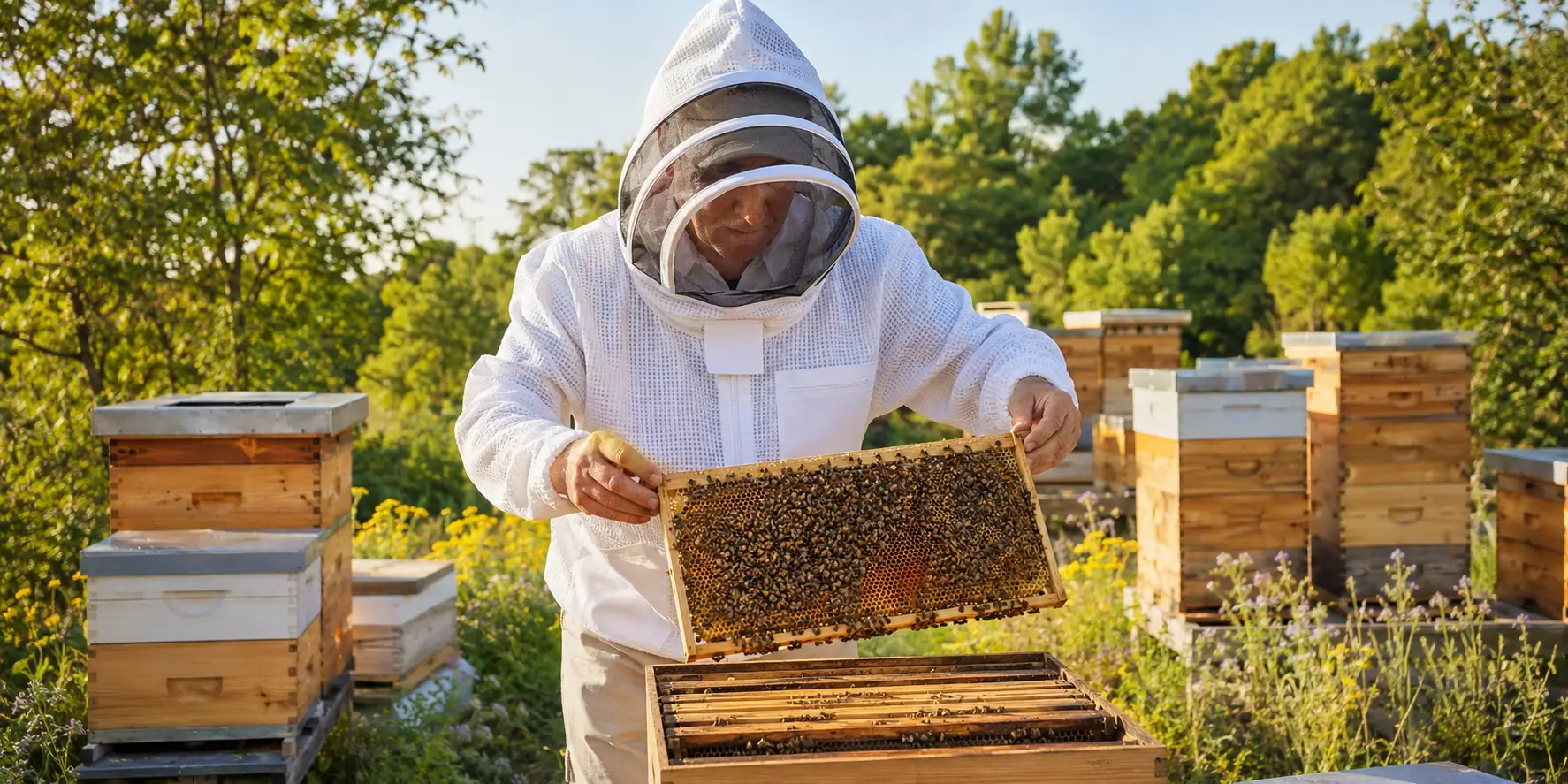
Gestión saludable de colmenas
Seis prácticas que protegen la salud de la colonia
La apicultura sólida combina inspecciones cuidadosas con acciones prácticas durante todo el año.
Inspeccionar consistentemente
Evalúe los patrones de cría, la actividad de la reina, la población de la colonia, las reservas de alimento, el espacio disponible y el comportamiento inusual sin sobrecargar la colmena.
Monitorear ácaros Varroa
Use métodos de prueba confiables, registre los resultados y responda antes de que la presión de los ácaros debilite la colonia o propague virus dañinos.
Proteger la nutrición
Mantenga el acceso a forraje diverso, agua limpia y reservas adecuadas. Alimente de manera consciente cuando los recursos naturales no puedan satisfacer las necesidades de la colonia.
Gestión de espacio y enjambrazón
Agregue o quite equipo a medida que cambien las condiciones de la colonia, reduzca el hacinamiento y utilice prácticas responsables de prevención y recuperación de enjambres.
Apoye a Queen Health
Vigile la calidad de la cría y el temperamento de la colonia en busca de señales de fallo de la reina, y tome medidas oportunas cuando sea necesario su reemplazo.
Prepárate para la temporada
Adapte la ventilación, las reservas de alimentos, la protección de la entrada, los equipos y la frecuencia de inspección a las condiciones locales de calor, frío, sequía e invierno.
Desafíos que enfrentan los apicultores
Las colonias saludables requieren atención activa
Los problemas pueden desarrollarse rápidamente. El reconocimiento temprano y la acción informada pueden marcar la diferencia entre una colonia que se recupera y una que continúa declinando.
Plagas y enfermedades
Los ácaros Varroa siguen siendo una de las mayores amenazas para las abejas melíferas manejadas. Los escarabajos de las colmena, las polillas de la cera, los virus y otros problemas de salud también requieren una identificación precisa y una respuesta adecuada.
Brechas de nutrición y forraje
La escasez estacional, la sequía, la pérdida de hábitat y las grandes áreas con diversidad vegetal limitada pueden dejar a las colonias sin el néctar y el polen que necesitan.
Cambios en la reina y la colonia
La falla de la reina, la enjambrazón, el pillaje, los cambios rápidos de población y la alteración del clima pueden alterar rápidamente las necesidades y la resiliencia de una colonia.

Los buenos registros fortalecen las buenas decisiones
Las notas de inspección ayudan a los apicultores a seguir los patrones de cría, las reservas de alimento, el rendimiento de la reina, los niveles de ácaros, los tratamientos, el clima y los cambios estacionales a lo largo del tiempo.
Los registros revelan tendencias que son fáciles de pasar por alto durante una sola visita y ayudan a los apicultores a evaluar qué decisiones de manejo están funcionando.
Cuando una colonia está batallando, las observaciones claras también hacen que las conversaciones con mentores experimentados, asociaciones locales y profesionales de la salud apícola sean más útiles.
Una responsabilidad de todo el año
La colonia necesita cambiar con las estaciones
El clima local y el forraje determinan el momento exacto, pero cada apicultor debe anticipar cómo cambian el crecimiento de la colonia, el alimento, las plagas y el clima a lo largo del año.
Crecimiento primaveral
Confirme la actividad de la reina, observe la expansión de la cría, evalúe las reservas de alimento, gestione el espacio y prepárese para la temporada de en enjambrazón a medida que aumentan las poblaciones.
Fuerza de verano
Monitoree el forraje, el agua, el calor, la ventilación, el espacio de la colonia y la presión de plagas durante la actividad máxima y la producción de miel.
Preparación para el otoño
Evalúe las reservas de invierno, la fuerza de la colonia, el estado de la reina, la condición del equipo y los niveles de ácaros antes de que el clima frío limite las opciones de manejo.
Protección invernal
Reduzca las molestias innecesarias, controle la humedad y la ventilación, proteja las entradas y supervise la disponibilidad de alimento cuando las colonias no puedan forrajear.
Abejas melíferas dentro de un ecosistema más amplio
La apicultura responsable también protege a los polinizadores nativos
Las abejas melíferas manejadas comparten los paisajes floridos con miles de especies de abejas nativas. La ubicación y el manejo de las colmenas deben considerar los recursos y los polinizadores ya presentes.
Equilibrar las necesidades de la colonia con el hábitat local
Los apicultores responsables consideran la diversidad de forraje, el agua, la exposición a pesticidas, el hábitat circundante y la cantidad de colonias manejadas que un área puede sostener.
Los abejorros nativos, las abejas albañilas, las abejas cortadoras de hojas, las abejas mineras y otras especies solitarias dependen del suelo desnudo, los tallos huecos, la madera muerta, las plantas nativas y las áreas de anidación sin alterar.
La conservación de las abejas melíferas y la conservación de las abejas nativas deben fortalecerse mutuamente. Las colonias manejadas sanas son una parte de una comunidad de polinizadores mucho más grande.
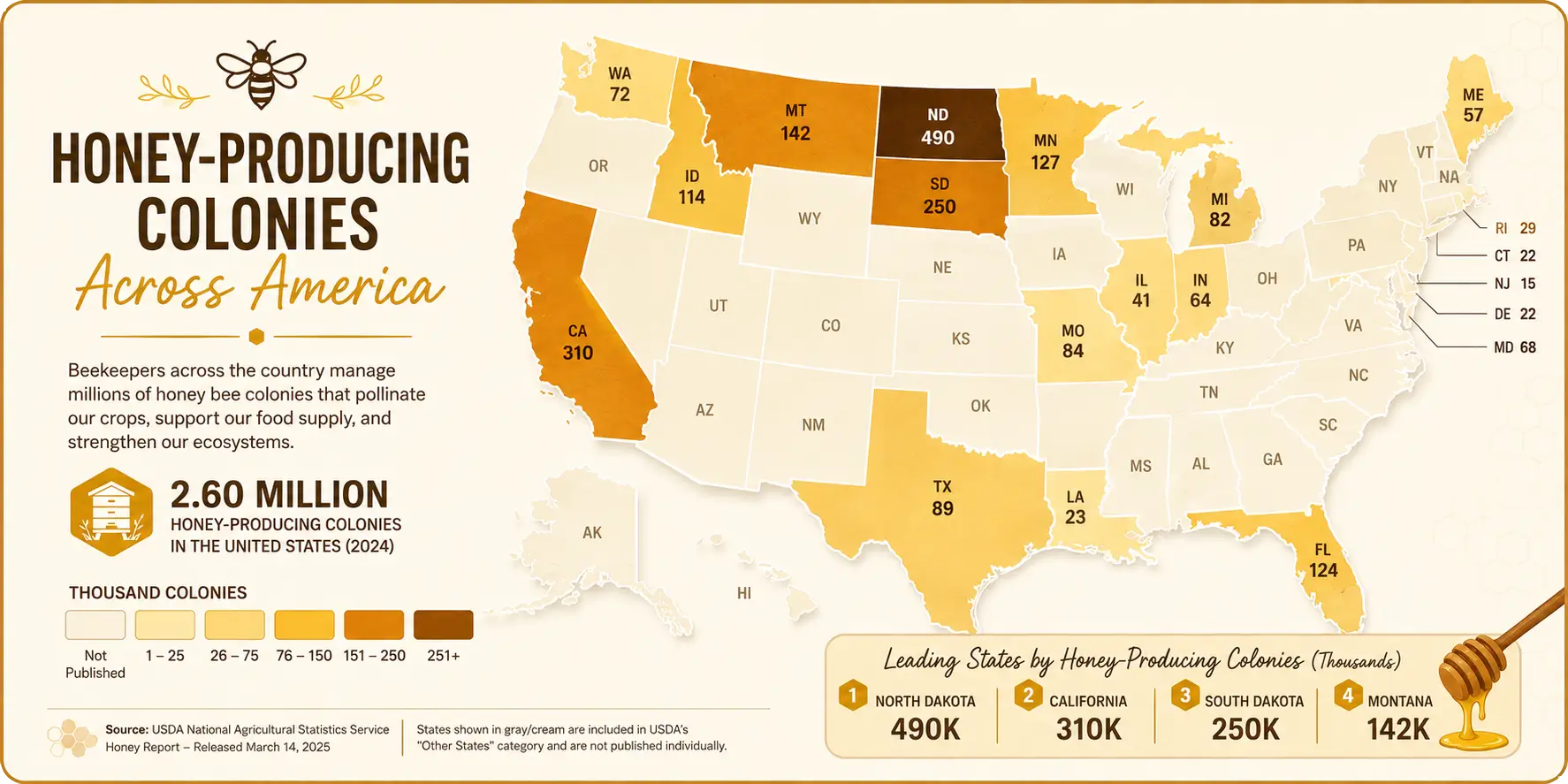
Educación y comunidad
Los apicultores fuertes siguen aprendiendo y compartiendo
Mentores con experiencia, asociaciones locales, capacitación práctica y educación pública ayudan a los apicultores nuevos y establecidos a tomar mejores decisiones.
Aprende de la experiencia local
El clima regional, el forraje, las plagas y los patrones estacionales importan. Los mentores y las asociaciones locales brindan un contexto que los consejos generales no pueden reemplazar.
Comparte información precisa
Los apicultores pueden ayudar a las escuelas, los vecinos, los agricultores y los líderes comunitarios a comprender la biología de las colonias, los enjambres, la polinización y el manejo responsable.
Apoya a la próxima generación
Las colmenas de observación, las demostraciones y la educación práctica transforman la curiosidad en conservación y fomentan futuros apicultores reflexivos.
Lleve el soporte a la práctica
Ayude a los apicultores a cuidar colonias sanas
Patrocina una colmena, adopta una colonia, apoya la educación sobre colmenas de observación o ayuda a financiar los recursos que los apicultores responsables utilizan durante todo el año.
Las abejas sanas necesitan un cuidado experto
Apoye a los apicultores que priorizan la salud de la colonia
Ayude a expandir la educación práctica, el manejo responsable de colmenas y la conservación de polinizadores en toda América.