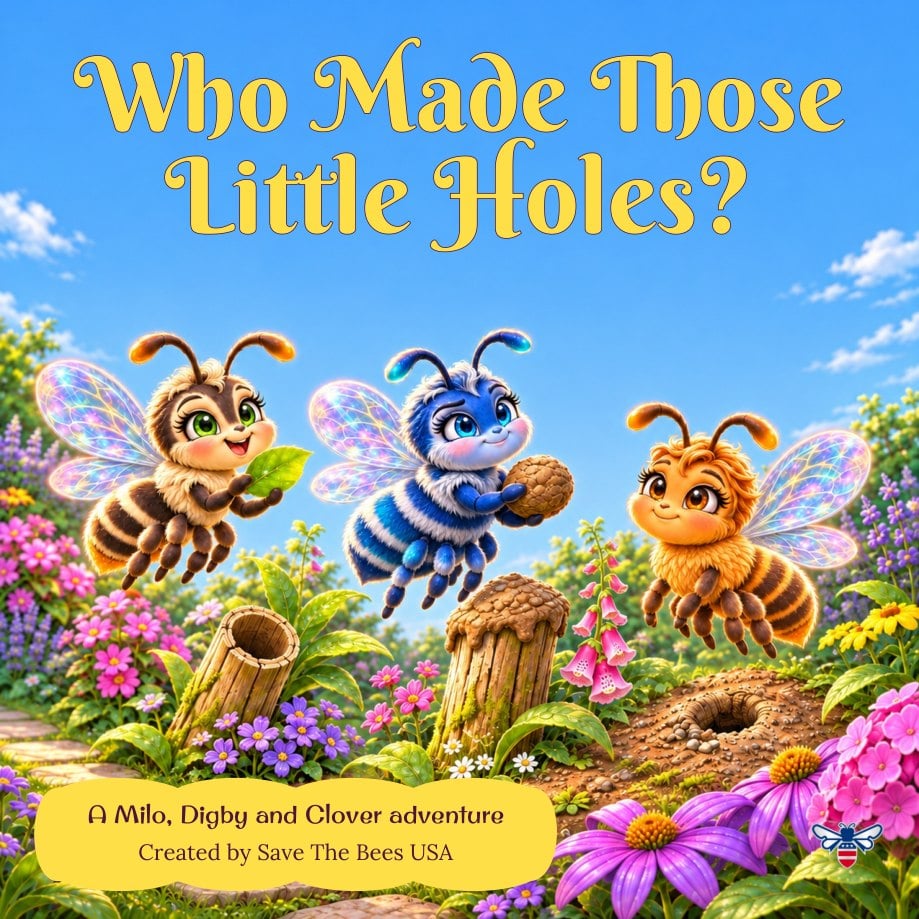
Who Made Those Little Holes?
Explore all children’s bee books
A bee adventure to share
Little holes can hold a big story. Follow a child and mother as they discover the busy lives of bees making homes in leaves, soil and hollow stems.
Created by Save The Bees USA for read-aloud time with children ages 4–7.
Coming soon. Purchase details will be added when available.
Inside Who Made Those Little Holes?
Clover the leafcutter bee gathers leaf pieces, Digby the mining bee builds underground, and Milo the mason bee makes mud dividers inside a hollow stem. These clues turn a garden mystery into a look at three different bee nurseries. Readers discover why a tidy-looking garden is not always the only kind of good garden.
What young readers can discover
- How leafcutter bees use pieces of leaves
- Why many bees nest in the ground
- How hollow stems and mud help some bees build nests
The illustrated story is followed by learning pages that invite children and grown-ups to revisit what they have noticed. Read slowly, look closely at the pictures and let your child’s questions guide the conversation.
Start a conversation after reading
Where did each bee make a home? What could you watch from a distance without disturbing a nest?
A story can be the beginning of a nature observation. Watch visiting bees from a respectful distance, leave nests undisturbed and let a responsible adult guide outdoor activities. Hive inspections belong with trained beekeepers using appropriate protective equipment.
Book details
- Title: Who Made Those Little Holes?
- Created by: Save The Bees USA
- Audience: Ages 4–7, shared reading
- Format: Illustrated paperback, 8.5 × 8.5 inches
- Length: 26 pages
- Paperback ISBN: 979-8-9828661-3-4
More ways to explore bees
Find another story in our children’s bee book collection, or try bee education activities for families and classrooms. Contact Save The Bees USA about book availability.