
Expand Pollinator Habitat
Programa de abejas albañiles
Create better nesting spaces, plant season-long forage, and help native mason bees thrive in backyards, schools, farms, and community landscapes.
Native Bees, Powerful Pollination
Safeguard and Revitalize Mason Bee Populations
Mason bees are gentle, solitary native pollinators that help gardens, orchards, farms, and wild plants reproduce.
Small Bees With an Important Role
Unlike honey bees, mason bees do not live in large social colonies or produce honey. Each female builds and provisions her own nest, often using narrow natural cavities.
They carry dry pollen across the underside of the abdomen, and their movement between flowers makes them especially effective in spring orchards and gardens.
Our program supports nesting habitat, season-long forage, practical education, and long-term community stewardship.

What Mason Bees Need
Nesting Space, Mud, and Reliable Flowers
Mason bee habitat is simple, but each element matters.
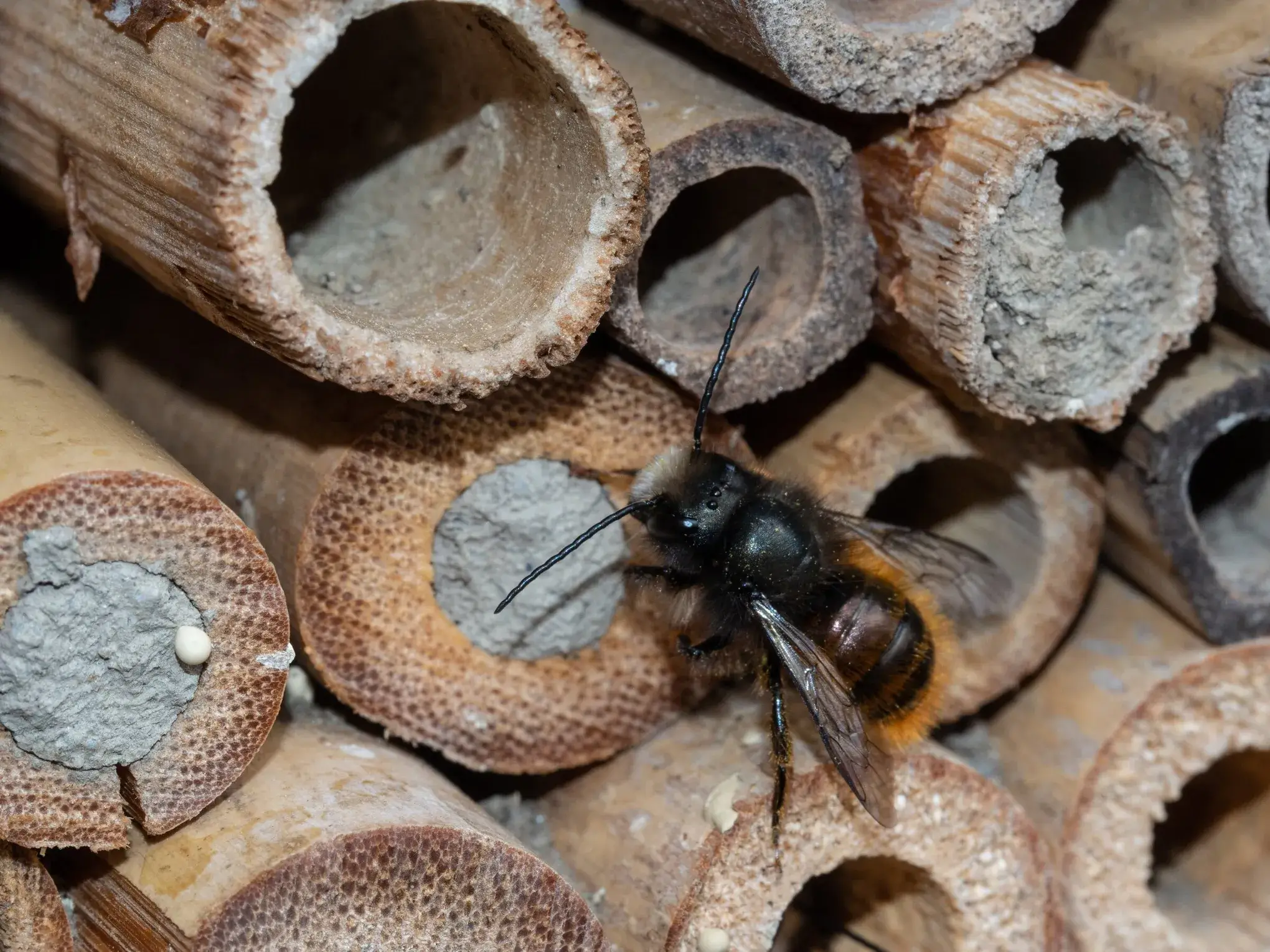
Clean Nesting Cavities
Properly sized, replaceable, or cleanable nesting materials help reduce disease and give females protected places to lay eggs.
Nearby Mud
Females use moist soil to divide each nesting tunnel into separate brood chambers.
Spring and Summer Forage
Diverse flowers close to the nest provide the pollen and nectar needed to provision developing young.
How the Program Works
Habitat, Education, and Care
Save The Bees USA helps communities move from learning about solitary bees to creating responsible habitat.
Create Safer Homes
Install well-designed nesting materials in dry, sheltered locations with morning sun.
Plant Better Forage
Add native and regionally appropriate flowers that bloom across the active season.
Teach Responsible Care
Show students, gardeners, and families how to monitor nests without disturbing developing bees.
Every Gift Helps Protect Mason Bees
Support the Mason Bee Program
Choose $25, $50, or $100 in monthly support through the secure form below.
Learning in the Garden
A Safe Way for Students to Observe Native Bees
Mason bees are nonaggressive solitary insects, making well-managed nesting areas useful for supervised outdoor learning.
Compare Bee Life Cycles
Students can learn how solitary mason bees differ from social honey bee colonies.
Observe Pollination
Flower visits make it possible to connect bee behavior with fruit and seed production.
Practice Stewardship
Maintaining flowers, mud, and clean nesting materials turns conservation into a recurring responsibility.
Create a Better Backyard
Give Native Bees the Basics They Need
A thoughtful nest, nearby mud, diverse flowers, and careful maintenance can make a real difference.
Support Native Pollinators
Help Mason Bees Thrive Where People Live and Learn
Your support expands safe nesting habitat, seasonal forage, and practical native bee education.