
Mason Bee Program
A female mason bee carries pollen into a narrow nesting cavity and walls off each chamber with mud. Give her spring flowers, a source of damp soil and a clean place to nest at home or at school.
Native Bees, Powerful Pollination
Safeguard and Revitalize Mason Bee Populations
Mason bees are gentle, solitary native pollinators that help gardens, orchards, farms, and wild plants reproduce.
Small Bees With an Important Role
Unlike honey bees, mason bees do not live in large social colonies or produce honey. Each female builds and provisions her own nest, often using narrow natural cavities.
They carry dry pollen across the underside of the abdomen, and their movement between flowers makes them especially effective in spring orchards and gardens.
If you are choosing reeds, tubes or wooden nesting blocks, Oregon State University Extension’s mason bee guidance explains why the nesting material matters.

What a mason bee needs to nest
Before you install a nest, look for three things within easy reach.
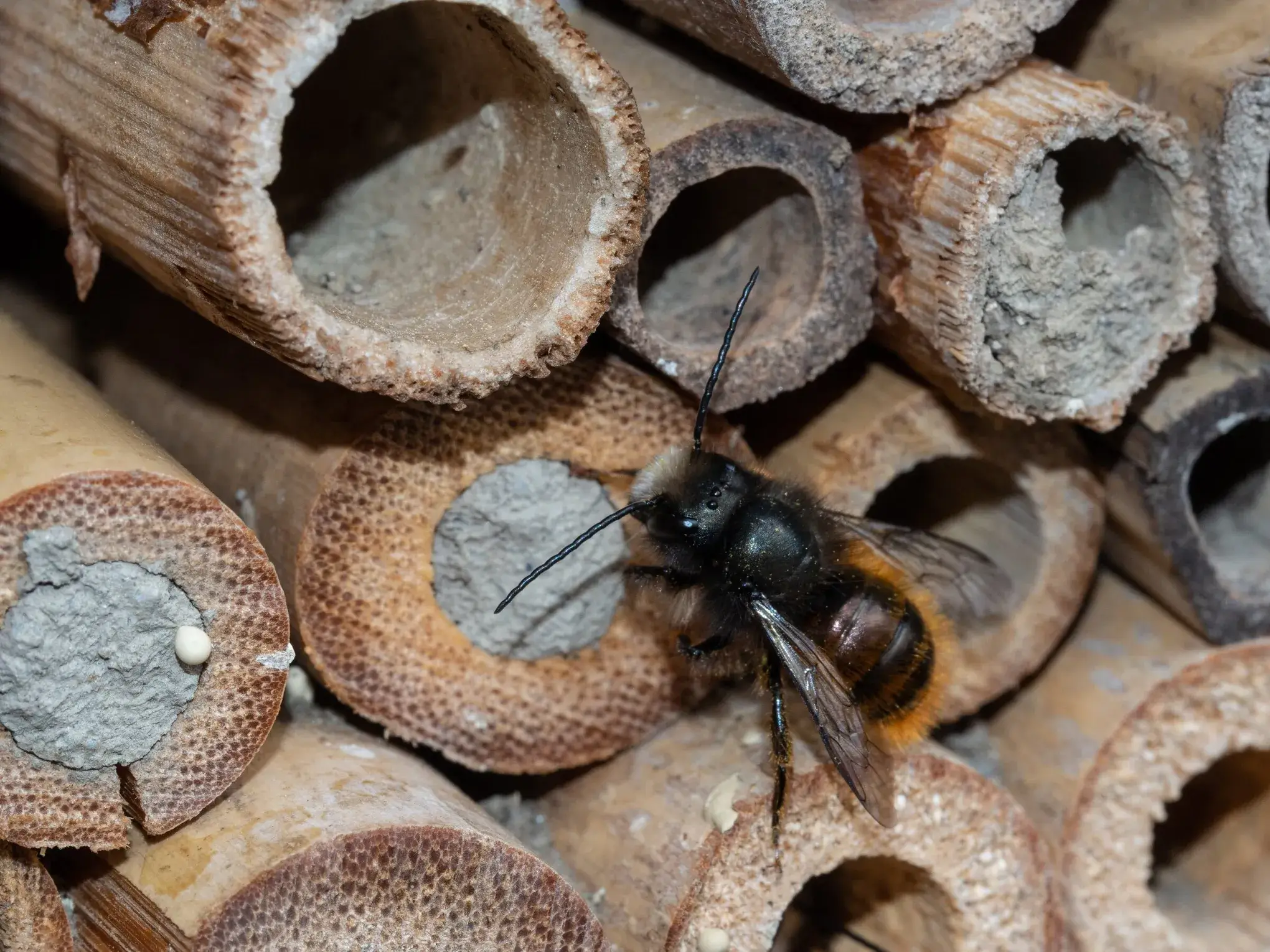
Clean Nesting Cavities
Properly sized, replaceable, or cleanable nesting materials help reduce disease and give females protected places to lay eggs.
Nearby Mud
Females use moist soil to divide each nesting tunnel into separate brood chambers.
Spring and Summer Forage
Diverse flowers close to the nest provide the pollen and nectar needed to provision developing young.
How the Program Works
Mason bee habitat, education and care
Save The Bees USA helps communities move from learning about solitary bees to creating responsible habitat.
Create Safer Homes
Install well-designed nesting materials in dry, sheltered locations with morning sun.
Plant Better Forage
Add native and regionally appropriate flowers that bloom across the active season.
Teach Responsible Care
Show students, gardeners, and families how to monitor nests without disturbing developing bees.
Support the Mason Bee Program
Choose a suggested amount or enter your own. Give once or choose recurring support for nesting habitat, flowers and education.
Learning in the Garden
How to observe a mason bee with students
These solitary bees usually ignore people as they visit their nests, making a well-managed site useful for supervised outdoor learning.
Compare nests and hives
Follow one female as she returns to her tunnel. She gathers pollen and builds each chamber herself. Compare that with a honey bee colony, where many workers share the work of rearing young.
Watch a mason bee carry pollen
Look at the underside of her abdomen as she moves between blossoms. Use a hand lens or a zoomed-in photo taken from the path. Can your group tell whether she is heading toward a flower or back to the nest?
Keep a nest journal
Sketch the front of a nesting block. Once a week, mark which holes have new mud caps. Leave the caps intact so young bees can develop inside. Record what is flowering when you first see activity.
Create a Better Backyard
What makes a good mason bee house?
Choose a shelter with nesting materials you can replace or open for cleaning. Oregon State Extension recommends paper-lined tubes or cleanable wooden blocks for managed nests. Deep bamboo tubes are difficult to inspect. Before buying a bee house, ask how you will look after it once a tunnel is occupied.
Support Native Pollinators
Help Mason Bees Thrive Where People Live and Learn
Your support expands safe nesting habitat, seasonal forage, and practical native bee education.