
Practical Pollinator Conservation
How to Save the Bees: 15 Ways You Can Help Bees and Pollinators
To save the bees, protect the food sources, nesting sites, and safe habitat that different pollinators need. Plant regionally native flowers, keep something blooming from spring through fall, reduce pesticide exposure, leave undisturbed nesting areas, protect existing habitat, and help schools and communities take part. Supporting responsible beekeeping matters too—but saving bees also means protecting wild native bees and other pollinators.
Helping “the bees” is not one single task. The familiar western honey bee is an important managed agricultural pollinator, while the United States is also home to about 4,000 native bee species, including bumblebees, mason bees, mining bees, sweat bees, and many others. Their needs overlap, but they are not identical. Honey bee conservation depends partly on skilled colony management; native bee conservation depends especially on healthy, connected habitat.
Why This Matters
Bees Support Wild Ecosystems and Agriculture
That distinction matters because pollination supports both wild ecosystems and agriculture. According to the USDA Natural Resources Conservation Service, about three-fourths of the world’s flowering plants and roughly 35% of global food crops depend on animal pollinators to reproduce. Bees are central to that work, alongside butterflies, moths, beetles, flies, birds, bats, and other animals.
On This Page
- 5 things you can do today
- Honey bees vs. native bees
- Plant native flowers
- Provide season-long blooms
- Reduce pesticide exposure
- Create nesting habitat
- Leave some bare ground
- Support native bees
- Provide safe water
- Create a pollinator garden
- Support responsible beekeeping
- Teach children
- Support local beekeepers
- Protect existing habitat
- Join citizen science
- Help schools create habitat
- Support conservation organizations
- Frequently asked questions
Quick Action Guide
5 Things You Can Do Today
Small, repeated actions are more valuable than a one-time gesture. Start with what fits your space and keep improving it season by season.
- 1Plant one regionally native flowering plant.Even a container can add useful forage.
- 2Skip an unnecessary pesticide treatment.Start with prevention, hand removal, or another lower-risk option.
- 3Leave a small nesting area undisturbed.Bare soil, hollow stems, leaf litter, and dead wood can all serve different species.
- 4Plan for continuous bloom.Check whether your yard has flowers in early spring, midsummer, and fall.
- 5Invite others to act.Help a school, workplace, garden club, or neighborhood create pollinator habitat.
Know the Difference
Honey Bees vs. Native Bees
Helping honey bees and helping native bees are related goals, but they are not interchangeable. A managed honey bee colony may contain tens of thousands of bees under a beekeeper’s care. Most native bee species live wild, and many females build and provision nests alone. A flower-rich landscape can support both groups, but wild bees also need nesting and overwintering habitat that a managed hive does not provide.
| Abejas melíferas | Native Bees |
|---|---|
| Introduced to North America and managed extensively by beekeepers | Thousands of species occur naturally in the United States |
| Live in large, perennial social colonies | Most species are solitary; bumblebees and some others are social |
| Use beekeeper-managed hives | Nest in soil, hollow or pithy stems, beetle holes, wood, cavities, or existing burrows, depending on species |
| Important managed pollinators for agriculture and honey production | Important pollinators of native plants, ecosystems, and many crops |
| Need responsible colony health, pest, disease, and swarm management | Need diverse forage plus protected nesting and overwintering habitat |
Build Better Bee Habitat
Actions 1–5
Plant Native Flowers for Bees
Regionally native flowering plants are one of the strongest foundations for bee conservation because they provide forage suited to local growing conditions and local food webs. Some native bees specialize on pollen from a narrow group of plants, while other bees use many kinds of flowers. A diverse native planting supports both.
“Native” must be considered regionally. A plant native to Florida may not belong in Colorado, and a species suited to a wet meadow may fail in a dry urban yard. Use your state native-plant society, local Extension office, conservation district, or a regional guide such as the Pollinator Partnership planting guides to choose plants for your ecoregion, soil, sunlight, moisture, and available space.
Prioritize pesticide-free plants when possible, group several plants of the same species so pollinators can forage efficiently, and include different flower shapes. Trees and shrubs count too: native willows, serviceberries, blueberries, and other woody plants can provide substantial seasonal forage where appropriate.
Start with the Save The Bees USA resources on pollinator plants and flowers for bees, then build a plant list that truly fits your location.
Provide Flowers Throughout the Growing Season
Bees need a reliable sequence of blooms, not a garden that flowers beautifully for only two weeks. “Succession planting” means choosing plants with overlapping bloom periods so pollen and nectar are available from the first warm days of spring through the last active weeks of fall.
Make a simple bloom calendar with three columns: spring, summer, and fall. List what currently blooms in each period, then fill the gaps with regionally appropriate plants. Early-flowering trees and spring ephemerals can help bees emerging after winter. Summer perennials sustain peak activity. Late asters, goldenrods, and other fall bloomers can support bumblebee queens and other pollinators preparing for winter—where those plants are native and suitable.
Weather and climate vary, so use seasons rather than fixed national dates. Aim for several flowering species at a time, and avoid cutting every bloom at once.
Reduce Pesticide Exposure
The safest way to reduce pesticide exposure is to prevent pest problems first, tolerate minor cosmetic damage, and use a pesticide only when it is genuinely needed. “Pesticide” includes insecticides, herbicides, fungicides, and other products; their risks differ by active ingredient, dose, timing, formulation, and exposure route.
Use an integrated pest management approach:
- Identify the pest before acting.
- Decide whether the damage requires treatment.
- Try prevention, physical barriers, pruning, hand removal, or targeted cultural controls first.
- If a pesticide is necessary, choose the most targeted effective option and use only as directed.
- Read and follow the entire label; the label is the law.
- Avoid treating open flowers or areas where bees are actively foraging unless the label specifically permits the use and all pollinator-protection directions can be followed.
- Prevent drift and runoff, and never assume a homemade or “natural” product is harmless.
El U.S. Environmental Protection Agency explains that pollinator risk reduction can include bloom-time limits, time-of-day restrictions, buffers, drift controls, and other label-based measures. For a home, school, farm, or public landscape, the responsible action is not to make sweeping claims about every product; it is to minimize exposure through informed, lawful use.
Create Nesting Habitat for Native Bees
Most native bees do not live in honey bee-style hives, so helping them requires protecting the places where they actually nest. Depending on the species, those places may include soil, hollow or pithy stems, holes in wood, dead trees, brush, rock cavities, or abandoned animal burrows.
Begin with natural habitat. Leave some standing stems through winter, keep a small brush pile or sound piece of dead wood where safe, preserve leaf litter in selected beds, and avoid disturbing known nest sites. When trimming hollow or pithy stems, leave part of the stems standing and keep cut material outdoors long enough for developing insects to emerge.
Artificial bee houses can be useful for observation and some cavity nesters, but they are not maintenance-free. Poor designs and crowded, unclean tunnels can concentrate parasites, pathogens, and nonnative bees. The University of Minnesota Extension advises that natural habitat may be better than a bee house unless the structure is properly designed and maintained.
Learn how Save The Bees USA supports solitary bees through the Programa de abejas albañiles.
Leave Some Bare Ground
A small patch of undisturbed, well-drained soil can be nesting habitat because many native bees raise their young underground. El National Park Service reports that nearly 70% of native bees nest as individuals in the ground. These are not honey bee colonies hidden beneath a lawn; they are usually solitary females, even when many nests occur near one another.
Choose a sunny or partly sunny spot that drains well and is already sparsely vegetated. Avoid landscape fabric, deep mulch, frequent tilling, flooding, and foot traffic there. Do not clear an intact native plant community to manufacture bare soil, and do not disturb an active nest aggregation. The goal is a small, stable patch within a larger habitat—not an eroded or chemically treated area.
If you see small holes and gentle bee activity, observe from a respectful distance. Many ground-nesting bees are docile and active for only a short seasonal period.
Support Every Kind of Bee
Actions 6–10
Support Native Bees — Not Just Honey Bees
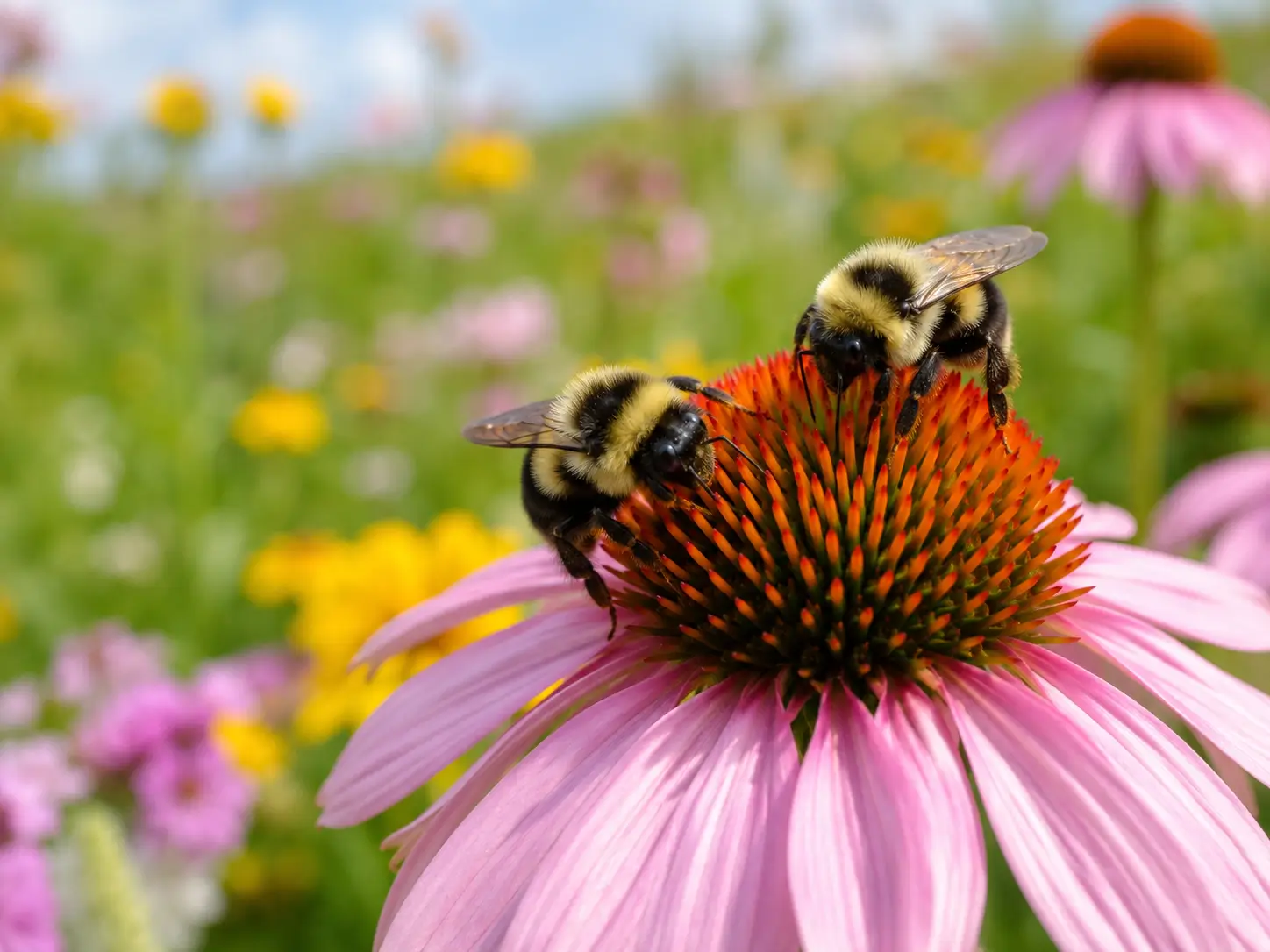
Honey bees are important managed pollinators, but honey bees are not America’s only bees. The United States has about 4,000 native bee species, ranging from tiny solitary bees to large carpenter bees and social bumblebees. Native bees support wild plant reproduction and pollinate many crops, including crops that benefit from specialized behaviors such as buzz pollination.
Native bee conservation is not achieved by adding more honey bee hives everywhere. In sensitive conservation areas, managed colonies can add competition for floral resources and may create disease concerns. The better default for most households is to restore habitat: plant native flowers, protect nesting sites, reduce pesticide exposure, preserve leaf litter and stems where appropriate, and learn which bees already live nearby.
The status of native bees also varies. It is inaccurate to say that every bee species is endangered, but it is equally inaccurate to treat all populations as secure. The rusty patched bumblebee, for example, has been federally listed as endangered since 2017, while the population status of many other native bee species is not well documented. The U.S. Fish and Wildlife Service identifies habitat loss and degradation, pathogens, pesticides, climate effects, and other interacting stressors among the species’ challenges.
Explore Save The Bees USA’s native-bee comparison, bumblebee education, and Programa de restauración de abejorros for species-specific ways to help.
A Wider Conservation Lens
Different bees need different kinds of help.
Managed honey bee colonies need informed care. Wild native bees need protected habitat.
Provide Safe Water Sources
A shallow, clean water source with secure landing places can help pollinators, especially during hot and dry conditions. Use a shallow dish, plant saucer, or birdbath with pebbles or flat stones rising above the water so small insects can land without falling into deep water.
Place it where it will not create a slipping or electrical hazard. Rinse the container and replace the water daily or very frequently; standing water can accumulate debris and allow mosquitoes to develop. Do not add sugar, honey, pesticides, or fragrances. Healthy flowering plants remain the primary food source—the water station is a supplement, not a substitute for habitat.
Oregon State University Extension describes shallow trays with pebbles as a practical way to help honey bees access water during heat waves.
Create a Pollinator Garden
A genuine pollinator garden provides food, water, shelter, nesting opportunities, and safer conditions across multiple seasons. It can be a balcony container, a front-yard bed, a school courtyard, a farm border, or several connected acres. Size matters less than thoughtful design and consistent care.
Include these six elements:
- Regionally native plants adapted to the site.
- Multiple plant species blooming in spring, summer, and fall.
- Clusters of flowers with varied shapes and colors.
- Natural nesting and overwintering areas, including selected stems, leaf litter, wood, and bare soil.
- A maintained shallow water source when appropriate.
- Pest management that minimizes pollinator exposure.
Avoid invasive plants, and plan for maintenance before planting. A garden that loses irrigation, is sprayed during bloom, or is cut down before insects emerge may not provide the benefit its sign promises. Keep a simple plant list and seasonal care schedule so future gardeners understand why “messy” stems or leaf litter remain in designated places.
Use the Save The Bees USA Pollinator Gardens guidance to plan a habitat project, or explore Certified Gardener resources for a more structured commitment.
Support Responsible Beekeeping
Keeping honey bees can support education, agriculture, and local food systems, but it is animal husbandry—not a shortcut to wildlife conservation. A beekeeper accepts responsibility for colony health, parasites and disease, forage, water, swarm prevention and response, public safety, recordkeeping, and the effects of hive placement on neighbors and the surrounding landscape.
Before obtaining bees:
- Take a reputable course and find an experienced local mentor.
- Learn local ordinances, registration rules, setbacks, and insurance requirements.
- Confirm that the site has adequate forage, water, sun, access, and flight paths.
- Plan evidence-based monitoring and management for Varroa mites and other health problems.
- Have a swarm plan and keep equipment in safe condition.
- Continue learning; conditions and management recommendations change.
USDA Agricultural Research Service identifies parasites and pests, pathogens, poor nutrition, and pesticide exposure as interacting pressures on managed honey bee health. Responsible management protects the colony, other apiaries, and the public.
Save The Bees USA’s Apicultura responsable and Bee Health resources explain the larger commitment. Beekeepers seeking a structured path can also review the Certified Beekeeper Program.
Teach Children About Bees and Pollinators
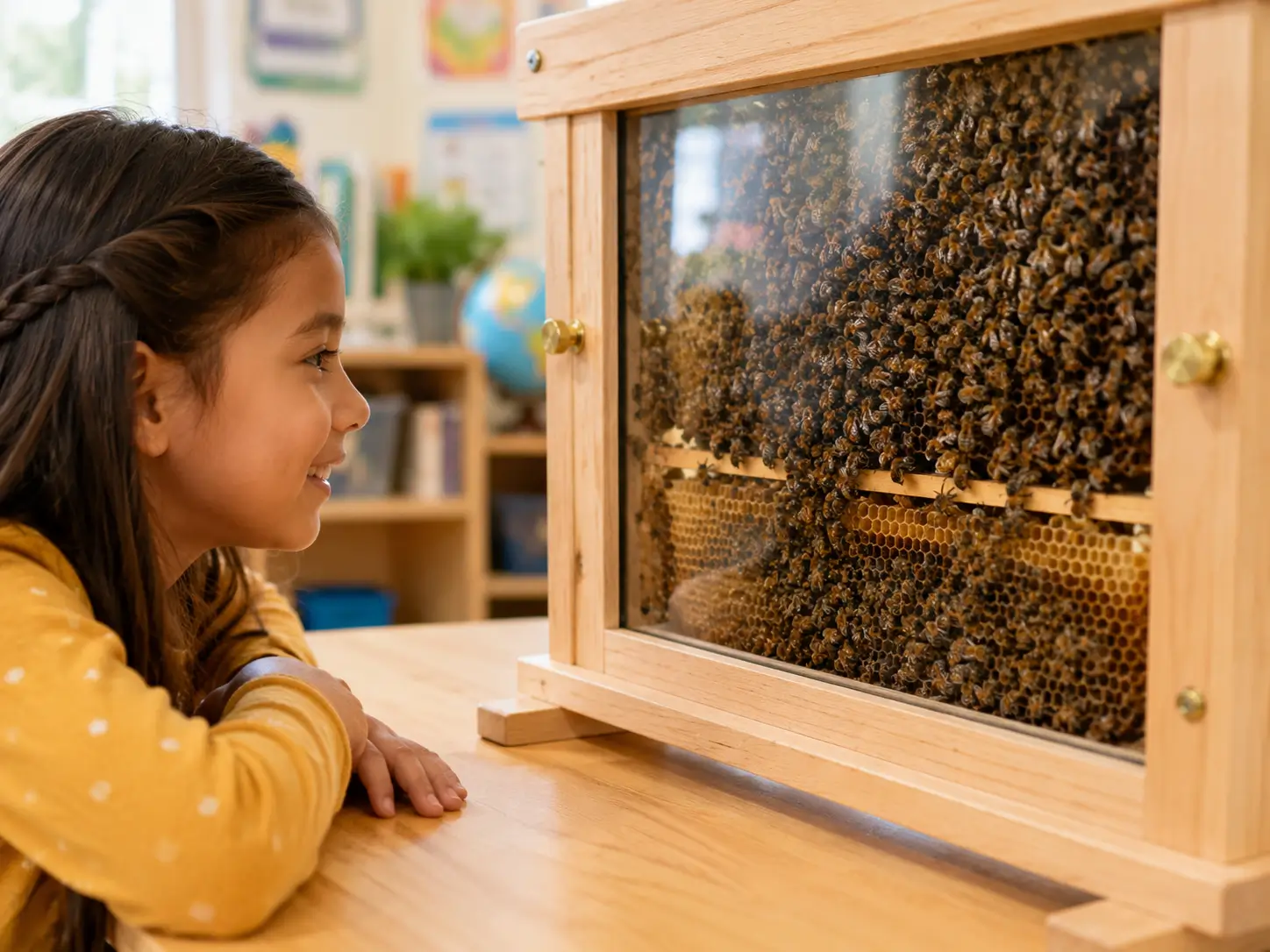
Children protect what they understand, and hands-on pollinator education can turn an abstract environmental issue into something observable and local. Students can track bloom times, compare flower shapes, map habitat, photograph visiting insects, test soil, design a water station, and present conservation recommendations. These activities connect biology with math, engineering, writing, art, and civic participation.
Safety must shape the lesson. A honey bee observation hive should be fully enclosed, professionally managed, and taught by trained adults. Children near active managed colonies need appropriate supervision and protective equipment; a hive box can contain tens of thousands of stinging insects. Native-bee activities can often focus on flowers, nesting habitat, and observation without handling bees.
Start with Educación sobre abejas resources. Schools interested in a guided living-colony experience can explore the Observation Hive Program and available school grant information. Education comes first; the program is one way to help make it tangible.
Education in Action
Let students see how pollination connects to food and habitat.
Careful observation can connect pollination, food, and habitat.
Turn Individual Choices Into Community Action
Actions 11–15
Support Local Beekeepers
Buying traceable local honey and hive products can support responsible beekeepers, but a purchase alone does not “save the bees.” Ask where the honey comes from, how the colonies are managed, and whether the beekeeper monitors pests and disease, follows local rules, manages swarms, and communicates with nearby landowners.
You can also support beekeepers by attending educational events, hiring experienced professionals for swarm removal, respecting apiary safety boundaries, and encouraging pesticide applicators to communicate before treatments. If you want to help fund responsible colony care without managing bees yourself, Save The Bees USA’s Adopta una Colmena and Adopta una reina programs provide structured options.
Remember that local honey supports managed honey bees and the people caring for them. Native bees still need habitat conservation.
Protect Existing Pollinator Habitat
Protecting a functioning meadow, hedgerow, woodland edge, riparian strip, nesting bank, or patch of native vegetation can be more valuable than replacing it with a new garden. Existing habitat may contain mature plants, underground nests, overwintering queens, stem-nesting larvae, host plants, and complex relationships that take years to develop.
Before mowing, clearing, grading, burning, or applying herbicide, inspect the site and ask what already lives there. Reduce mowing frequency where safety allows, avoid mowing every refuge at the same time, retain flowering edges, and schedule necessary work to reduce harm to active nests and blooms. On larger sites, consult local conservation professionals about invasive species, prescribed fire, grazing, and restoration timing.
Conservation is not only planting. It is also choosing what not to remove.
Participate in Citizen Science
Careful observations from the public can help researchers document where pollinators occur and how distributions change. You do not need to identify every bee perfectly. Good records begin with a clear photograph, date, location, habitat notes, and an honest “unknown” when identification is uncertain.
Projects differ in their methods, geography, and data-review standards. Follow the project protocol rather than uploading the same casual observation everywhere. National options include iNaturalist and Bumble Bee Watch; the U.S. Geological Survey explains that contributed observations can help researchers validate models and locate bee populations. Teachers can also turn repeated observations at one school garden into a long-term dataset.
Never enter private property, handle a listed species, expose a nest, or share a sensitive location when project guidance says not to do so.
Help Schools Create Pollinator Habitat
A school pollinator habitat can serve both wildlife and learning when students help plan it and the school commits to long-term care. A durable project begins with permission, a site assessment, a realistic budget, a water plan, summer maintenance, and a clear person responsible after the original class graduates.
Students can map sunlight and drainage, research regional native plants, design bloom succession, calculate planting quantities, create interpretive signs, record visiting species, and explain pesticide precautions to grounds staff. Garden clubs, parent groups, Extension volunteers, local nurseries, conservation districts, and community organizations can contribute expertise or materials without taking student ownership away.
El U.S. Fish and Wildlife Service Schoolyard Habitat Project Guide walks educators through planning, installation, and long-term stewardship. Save The Bees USA can help schools connect habitat with pollinator education, pollinator gardens, the Observation Hive Program, and grant opportunities.
Support Pollinator Conservation Organizations
Conservation organizations turn individual concern into education, habitat projects, community coordination, advocacy, and sustained programs. The strongest support is aligned with what an organization can document: volunteer for a defined project, share accurate educational resources, attend public meetings, contribute professional skills, create habitat with a local partner, or give financially when you can.
Before supporting any organization, review its mission, programs, leadership, financial information, and evidence of current work. Effective conservation is specific about which pollinators it serves and how.
Save The Bees USA is a national 501(c)(3) nonprofit focused on pollinator education, habitat restoration, responsible beekeeping, and community conservation. Explore our programs, learn about Save The Bees USA, contact the team, or support the mission after choosing the action that fits you.
Clear, Factual Answers
Frequently Asked Questions About Helping Bees
Concise answers to common questions about honey bees, native bees, habitat, gardening, and responsible beekeeping.
How can I help save the bees?
Plant regionally native flowers, provide blooms across the growing season, reduce pesticide exposure, and protect natural nesting and overwintering habitat. Include both managed honey bees and wild native bees in your thinking. You can also help a school or community build habitat, support responsible local beekeepers, contribute observations to citizen science, and support credible conservation work.
What is the best thing I can do to help bees?
For most people, the best starting point is to protect or create diverse, pesticide-conscious habitat with native flowers and nesting areas. The exact action depends on your region and space. Preserving an existing meadow or hedgerow may be better than planting something new, while an apartment resident can use containers, support a school project, or volunteer locally.
Should I plant flowers to help bees?
Yes—if the flowers fit your region and site and are managed safely. Choose several plant species with overlapping bloom periods from spring through fall. Favor regionally native plants, avoid invasive species, and ask suppliers about pesticide use. Pair flowers with nesting habitat, water where appropriate, and reduced pesticide exposure; flowers alone are only one part of conservation.
Do native plants help bees?
Regionally native plants can provide pollen and nectar, and some support specialist bees that use a narrow range of plants. They also contribute to local food webs. “Native” is regional, so select plants using local Extension, native-plant society, conservation-district, or ecoregional guidance rather than a one-size-fits-all national list.
Are honey bees endangered?
The western honey bee is not listed as an endangered species in the United States; it is a widely managed agricultural bee. That does not mean managed colonies are problem-free. Beekeepers face serious pressures from Varroa mites, pathogens, poor nutrition, pesticide exposure, and other interacting stressors, so strong colony management and abundant forage remain important.
Are native bees endangered?
Native bees do not share one conservation status. Some species appear stable, some are declining, some lack enough monitoring data for a confident trend, and a small number are federally listed. The rusty patched bumble bee and Franklin’s bumble bee are federally endangered. Habitat protection, pesticide risk reduction, and better monitoring can help many native species even when their status is uncertain.
Does buying local honey help save bees?
Buying traceable local honey can support a responsible beekeeper and the care of managed honey bee colonies. It does not by itself restore native-bee habitat or solve pollinator decline. Ask how the colonies are managed, then pair your purchase with habitat action: plant native flowers, protect nesting sites, reduce pesticide exposure, or support a local conservation project.
Should everyone become a beekeeper?
No. Beekeeping requires training, equipment, time, ongoing health monitoring, swarm planning, safe placement, and compliance with local rules. Poorly managed colonies can create problems for the bees, nearby apiaries, neighbors, and wild pollinators. Many people will help more by creating native-bee habitat, supporting an experienced beekeeper, or volunteering with a conservation or education program.
How can I help bees without becoming a beekeeper?
Plant native flowers, leave some stems and bare ground for nesting, keep blooms available across seasons, provide shallow clean water, reduce pesticide use, protect existing habitat, and participate in citizen science. You can also help a school garden, support responsible beekeeping education, or fund habitat and pollinator education without owning a hive.
How can schools help pollinators?
Schools can create native pollinator gardens, preserve nesting habitat, reduce pesticide exposure, conduct repeated bee observations, and integrate the project into science, math, writing, art, and service learning. Success requires administrative approval, a safety plan, summer watering, long-term maintenance, and student participation. Observation hives should be enclosed, professionally managed, and taught with appropriate supervision.
Evidence and Accountability
About This Resource
Published by Save The Bees USA, a national nonprofit pollinator conservation and education organization. This resource covers honey bees, native bees, bumblebees, solitary bees, and other pollinators so readers can choose actions that match the species and habitats around them.
Sources and Further Reading
- U.S. Geological Survey, How many species of native bees are in the United States?
- U.S. Geological Survey, Pollinator Science Strategy, 2025–35
- U.S. Geological Survey, Western Bumble Bee and Native Pollinator Research
- USDA Natural Resources Conservation Service, Insects and Pollinators
- National Park Service, Native Bees
- U.S. Environmental Protection Agency, Tools and Strategies for Pollinator Protection
- U.S. Fish and Wildlife Service, Rusty Patched Bumble Bee
- U.S. Fish and Wildlife Service, Endangered Species Status for Franklin’s Bumble Bee
- USDA Agricultural Research Service, Honey Bee Health
- University of Minnesota Extension, Nests for Pollinators
- Oregon State University Extension, How to Help Bees Survive a Heat Wave
- U.S. Fish and Wildlife Service, Schoolyard Habitat Project Guide
Ready to Do More for Bees?
Choose the action that best matches your interests and capacity.