
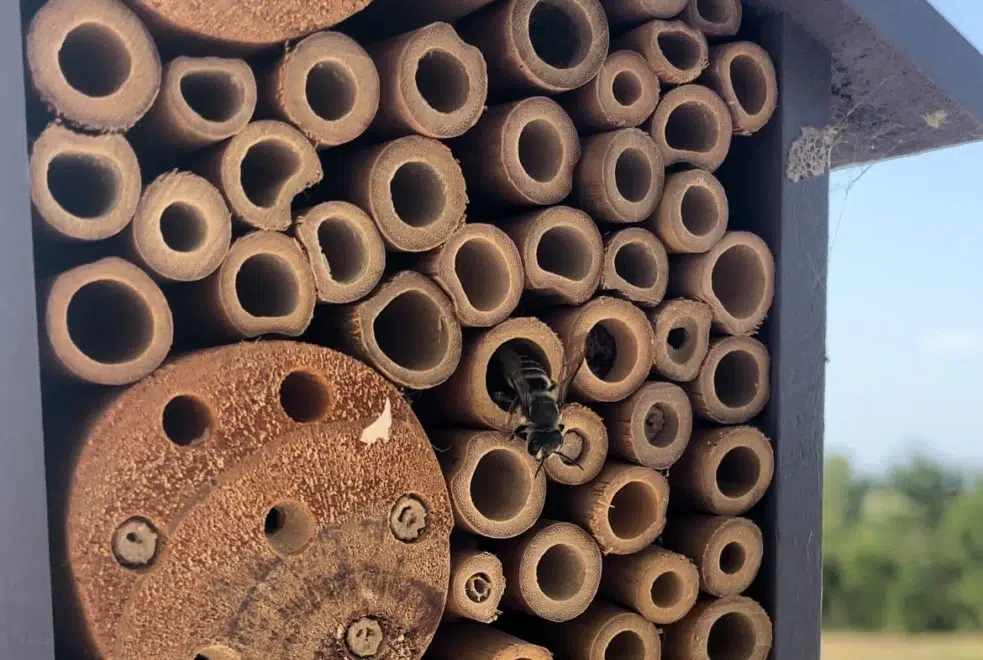
Bee house care begins before the first nesting tube goes up. Who will check the shelter, and how will you know when it is safe to replace used tubes? A small nest box with a caretaker is a manageable project for a family, school or community garden.
Which bees use a bee house?
Some female mason bees and leafcutter bees use narrow cavities to build a row of nest cells. Each female stocks those cells for her own young. A smooth mud cap or pieces of leaf can reveal that a nest is occupied. Leave a sealed tube in place.
Naturally hollow stems can serve the same purpose. Many other native bees, including mining bees, dig nests in the ground. For those bees, a quiet patch of open soil is more useful than another box of tubes.
A bee house care plan for the garden
First, choose a sheltered position and a design with nesting material you can replace. Fix the box securely so it stays dry and steady. Then decide who will notice loose tubes, water damage or a shelter that has fallen. Group leaders can put those checks on the garden calendar alongside watering.
When a tube is newly capped, write the date in a notebook. Bees may spend the winter inside. Because different species emerge at different times, do not empty an occupied tube or throw away its contents. Utah State University Extension explains how to provide fresh material while the bees finish emerging from the old set. Read the Extension guide to managing wild bee hotels.
Keep a bee house care record
Draw the face of the box in a notebook. For each tube, note the date you first saw a cap and when you later saw an exit hole. This bee house care record helps the next caretaker distinguish last year’s tubes from the clean ones offered this spring.
Does a nest box need bees added to it?
Let local bees find the shelter on their own. A box may stay quiet even while ground-nesting bees are active a few feet away. If a box stays empty, look at the whole garden. Are there flowers nearby when bees are active? Is the box dry? Is there undisturbed ground for bees that do not use holes in stems? Those observations help you decide what the site needs next.

Explore native bee habitat with Save The Bees USA
For another way to help, grow flowers that bloom at different times and preserve existing nest sites. A hollow stem can stay standing while other stems are cut back. Explore the Save The Bees USA Mason Bee Program or use the free bee education activities to plan a garden observation with your group.