
⚡ Buzz Pollination Challenge
Can You Power the Bumblebee Garden?
The garden needs your buzz power. Decide whether each statement is true or false. Every correct call wakes up a new crop or flower and brings you closer to a striped champion award.
Many bumblebees can shake pollen loose with buzz pollination.
Buzz it if the statement is true. Skip it if it is false.
Many bumblebee queens begin nests in sheltered cavities, often underground.
Buzz it if the statement is true. Skip it if it is false.
Every member of a bumblebee colony survives together through winter.
Buzz it if the statement is true. Skip it if it is false.
Tomatoes and blueberries can benefit from bumblebee buzz pollination.
Buzz it if the statement is true. Skip it if it is false.
A tidy yard with no spring or fall flowers gives bumblebees everything they need.
Buzz it if the statement is true. Skip it if it is false.
Your buzz award is ready!
How to Recognize Bumblebees
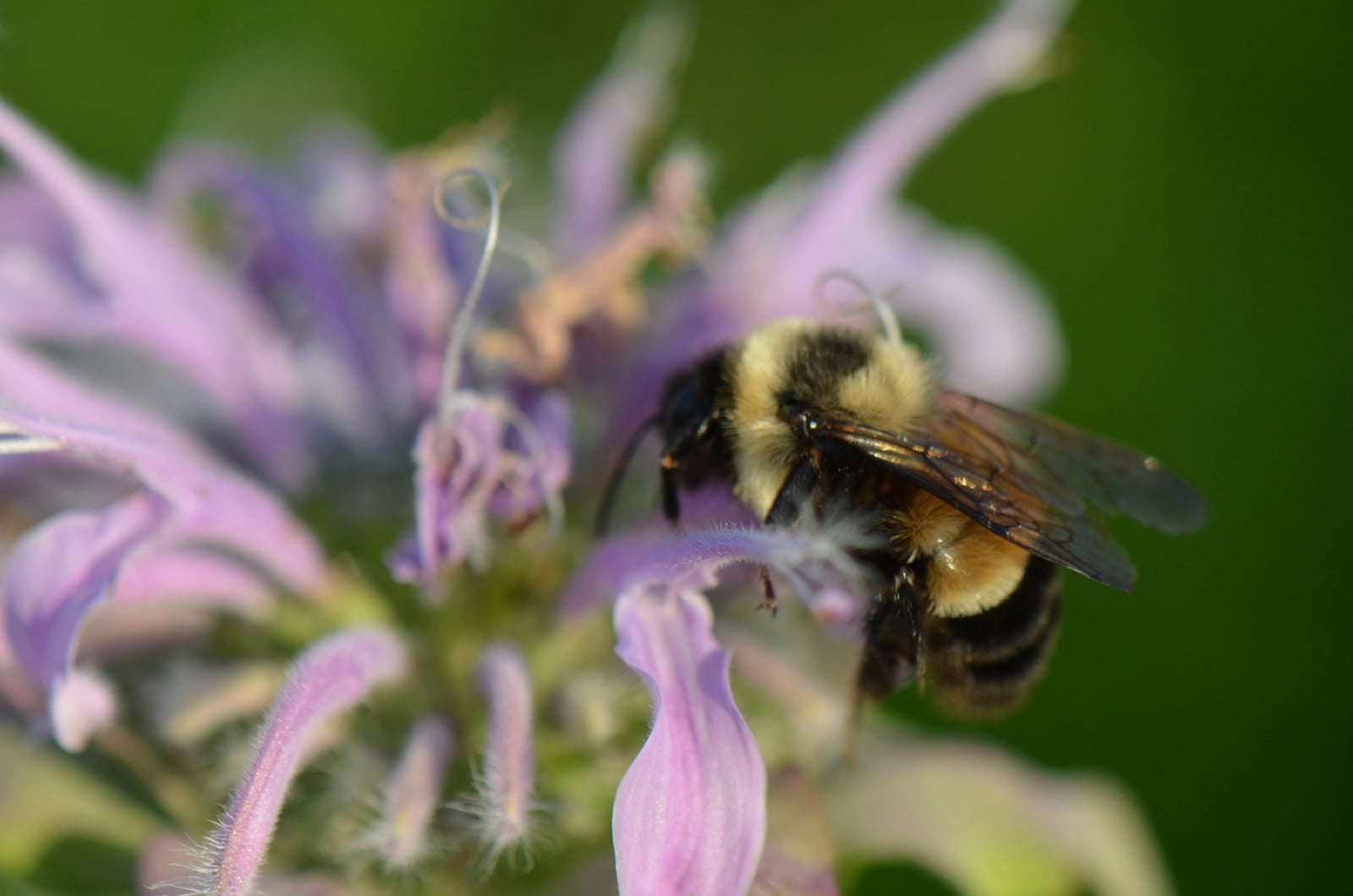
Bumblebees belong to the genus Bombus. Look for a rounded, hairy body and bands of color. Many species have yellow and black hairs, but the colors and patterns vary. When you see one feeding, watch its back legs. Female workers often return to the nest with a visible lump of pollen on each hind leg.
Where Bumblebees Nest
In spring, a queen searches for a sheltered place to start her colony. For example, a queen may use an old rodent burrow or a sheltered pocket in dense vegetation. If you notice bees coming and going from one small opening, give the entrance space and watch from a distance.
Once the first workers emerge, they take over most of the foraging. Later in the season, the colony produces males and new queens. In most species, those young queens spend winter on their own. If you leave some leaf litter and undisturbed soil in your garden, a queen may find a place to shelter.
How to record a bumblebee sighting
Write down the date, county, and flower the bee was visiting. Then take a photograph from above and, if you can, one from the side. These details help a specialist compare similar species. Keep the original photos so you can share them with a local naturalist or monitoring project.
Watch Bumblebees at Work
If a bumblebee lands on a tomato flower, listen for a change in pitch. The bee grips the flower and vibrates its flight muscles. As a result, pollen shakes out through tiny openings in the anthers, the parts of the flower that hold it. This is buzz pollination. For example, blueberry flowers also release pollen when a bee vibrates them.
Which bumblebee is on the flower?
Look at the bands on the bee’s back and abdomen. Next, photograph the bee from above and from the side so you can compare those marks later. For example, workers and males of the rusty patched bumble bee have a rusty spot surrounded by yellow hairs. However, queens lack that spot. The U.S. Fish and Wildlife Service species guide shows what to look for.
Keep flowers available through the season
An emerging queen needs early flowers to begin a nest. Our bumblebee life cycle guide follows one colony from its first workers to the next generation of queens. Later, workers gather nectar and pollen to feed the colony. Choose locally native plants that bloom at different times, and leave an undisturbed patch of ground or leaf litter where a new queen can overwinter.
Help Bumblebees Where You Live
Start by writing down which flowers bumblebees visit in your garden and when those flowers bloom. If several weeks pass with little in flower, choose a locally native plant that fills the gap. Learn more about the Bumblebee Restoration Program.