
How to recognize mason bees
Look for a small bee on an apple or cherry blossom in spring. If she tilts up to reach the center, check the underside of her abdomen. A female blue orchard bee carries pollen on a brush of hairs there. As a result, her belly can look yellow even when the rest of her body looks dark blue.
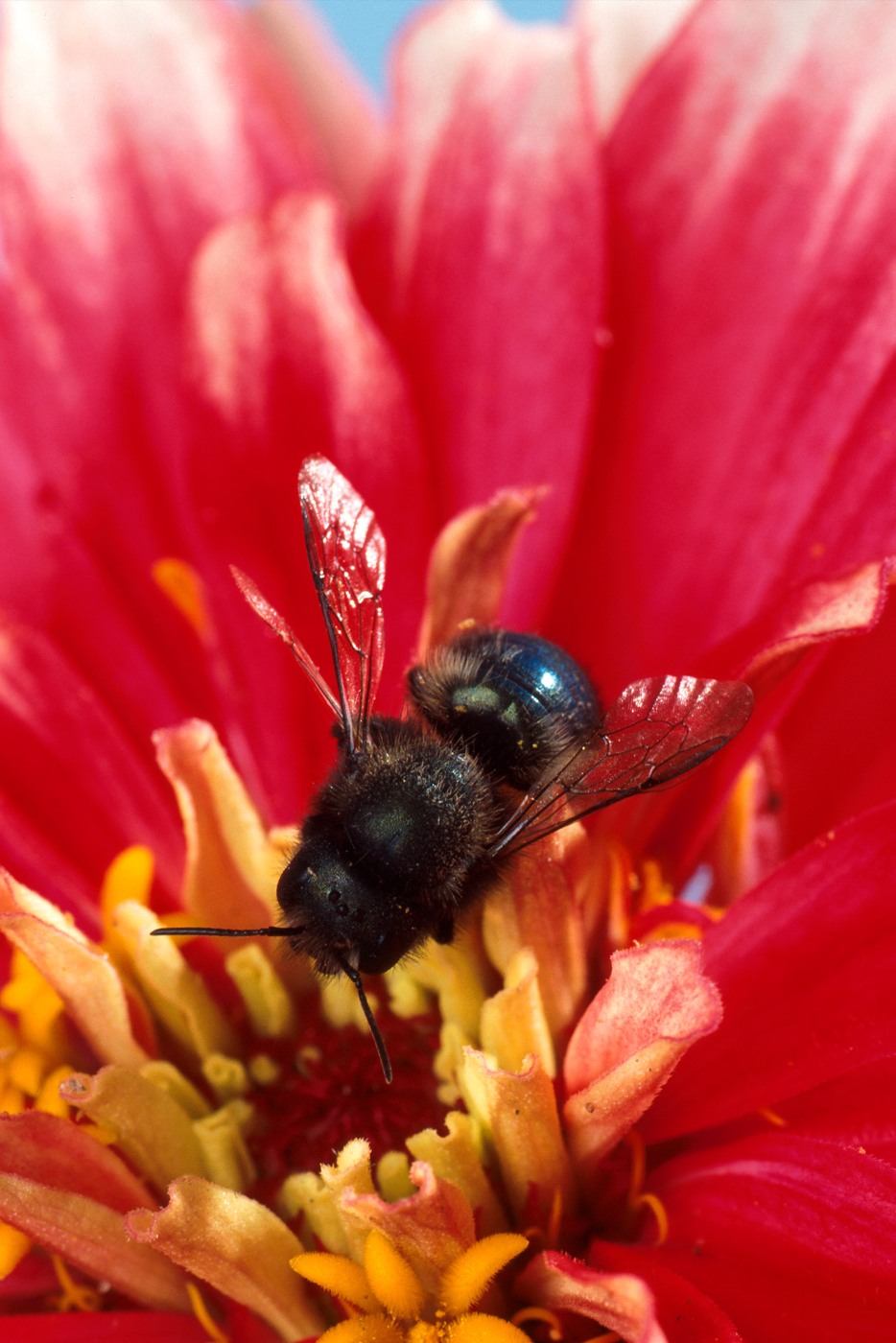
The blue orchard bee (Osmia lignaria) is one North American member of this group. Other species can look quite different, so a metallic sheen alone is a poor way to identify one. Instead, photograph the bee on its flower and note which plant and which part of the country you saw it in. Compare your sighting with the Missouri Department of Conservation field guide.
Inside a mud-sealed nest
A female finds an existing narrow tunnel, often one a beetle left in wood. First she gathers pollen and nectar for her young. Then she lays an egg on the food and builds a mud partition. She repeats those trips until a row of small chambers fills the tunnel.
A tunnel used by mason bees can look empty for months after the entrance is sealed. Inside, the young bees develop out of sight. Leave the mud cap in place so they can emerge on their own. If you are curious about the layout, the University of Florida’s illustrated blue orchard bee profile shows a nest opened lengthwise.
What can I do to save solitary bee species?
Start with food. For example, a native shrub that flowers just before your fruit trees can give early visitors a source of pollen. Look for suitable blooms after the fruit trees finish, too. Because bloom times vary by location, record the dates in your own garden. See what researchers found when mason bees and honey bees visited sweet cherry orchards.
Next, look for shelter that mason bees can use. Leave some old stems or sound, unpainted wood with existing insect tunnels in a quiet area. If you install a bee house, choose one with nesting materials you can replace after the bees emerge. Moisture, parasites and disease can build up in neglected nesting blocks. Utah State University explains how to care for occupied nests.
Our Mason Bee Program has more ways to help. For a first activity, spend five minutes beside a flowering tree. See whether each visitor carries pollen on her legs or underneath her body.