
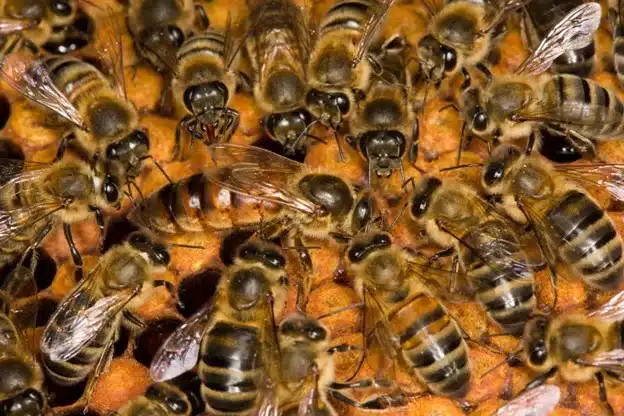
Meet the queen bee on the comb
If you watch a queen bee on a frame of comb, the first thing you may notice is the ring of workers facing her. She is the colony’s mother. Workers feed the young, tend the nest and decide where to forage. Follow a honey bee queen from her first day in a queen cell to the eggs she lays in a working hive.

How workers raise a queen bee
A queen and a worker can both develop from a fertilized egg. What happens next depends on how nurse bees raise the young larva. They give a future queen a generous supply of royal jelly in a special cell that hangs downward from the comb. An adult queen normally emerges about 16 days after the egg was laid.
What happens when a colony swarms?
When a strong honey bee colony divides, the old queen usually leaves with a swarm of workers. The bees that stay behind raise a successor. If several young queens emerge, they may fight. At other times the colony replaces a failing queen without sending out a swarm.
How many eggs can a queen lay?
A queen bee can lay around 2,000 eggs in a day during the spring buildup. Her pace changes with food, season and colony size. A fertilized egg can become a worker or queen. An unfertilized egg normally develops into a male, called a drone.
What does the queen eat?
Young workers eat pollen and nectar and use glands in their heads to make brood food. As adults, queens still depend on attendants to feed them. That is one reason a healthy queen and a well-fed colony go hand in hand.
Can a queen bee sting?
Female workers and queens can both sting. Workers defend the nest. A young queen can use her stinger when she encounters a rival queen. Drones have no stinger.
How to spot her attendants
Look for workers facing inward and touching the queen with their antennae. As they move through the hive, they help spread her chemical signals. You may spot this circle before you can make out the queen’s long abdomen.
How long does a queen live?
A queen can live for several years, although her egg production can decline earlier. Beekeepers also look at the brood on the comb. Seeing new eggs or young larvae can give them clues even when the queen is hard to spot.
For a closer look at how queens develop, see Penn State’s illustrated guide. You can also see our own queen on a frame and explore the Adopt A Queen program, where a qualifying adoption lets you name a queen.