
$100 Pollinator Garden Grant
Apply for a $100 pollinator garden grant to plant a new garden or expand an existing one. Schools and community organizations can use the award for flowers, seeds, soil, and other garden materials.
A Simple Way to Grow Habitat
How the pollinator garden grant works
Selected schools and organizations receive a $100 grant to help start or expand a pollinator garden. The application is short because good local ideas should be easy to share.
Apply
Tell us who you serve, where the garden will grow, and what you hope to create.
Plant
Use the award for plants, seeds, soil, signs, or basic garden supplies. If you are choosing plants, consult Pollinator Partnership’s regional planting guides.
Share
Send us a completion photo and a brief update about your garden. For activities to use with students, explore our bee education resources.
Growing Together
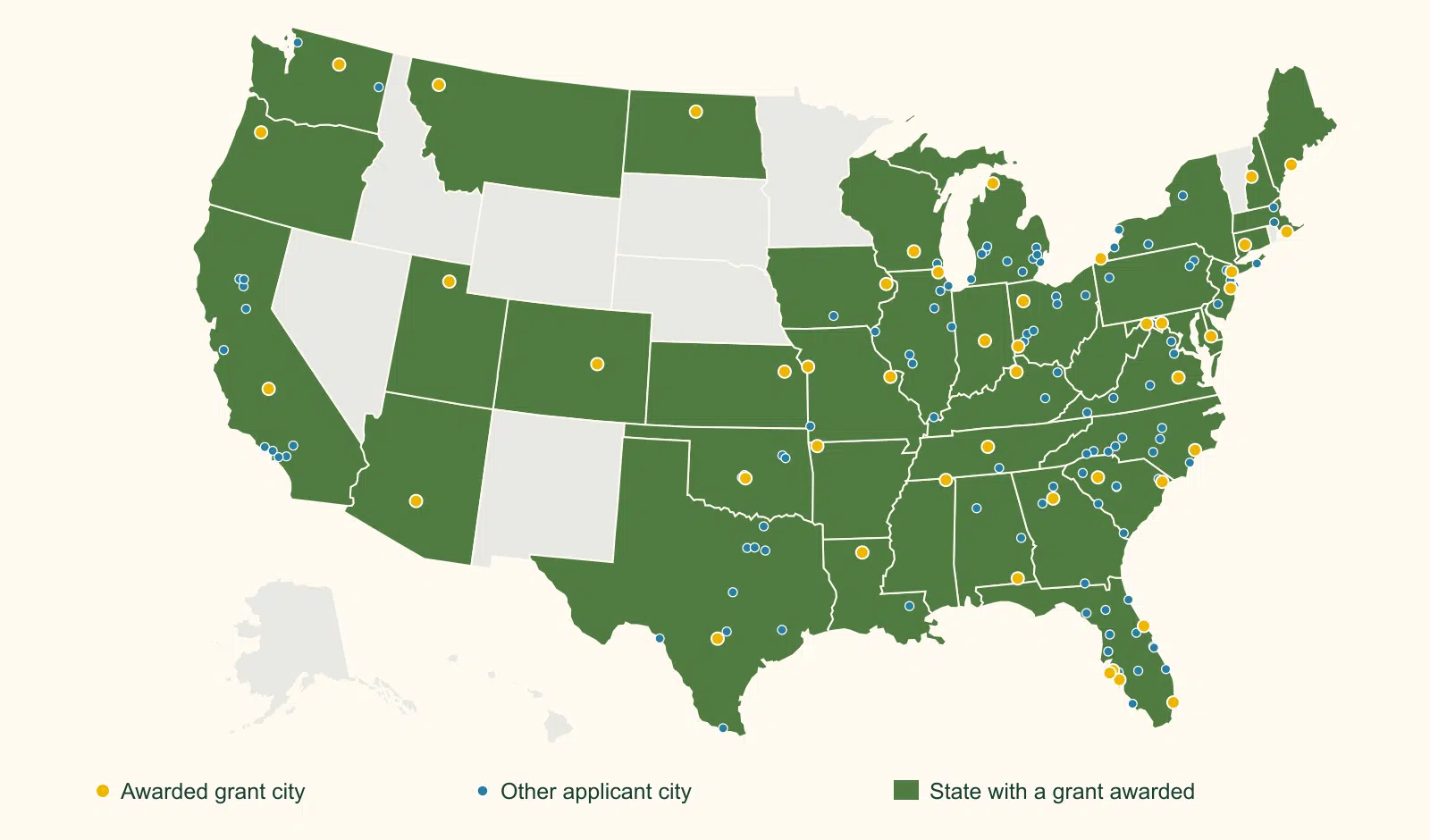
Where pollinator garden grants have been awarded
As of October 12, 2026, Save The Bees USA had awarded 46 pollinator garden grants in 39 states. Explore the map below to see where schools and community groups are growing habitat.
Thank you for your applications, your emails, and the care you put into these projects. You have shown us how much these small grants can mean. We are doing our best to fund as many gardens as possible as donations become available.
If you have applied and are still waiting, thank you for your patience. Funding is limited, but our hope is to keep getting these $100 grants out to more of you and bring a little more life, learning, and color to communities in every state.
At St. Anthony Catholic School in San Antonio, fifth-graders added pollinator-friendly plants to a wildlife habitat they had already started. Their teacher later reported that the garden was thriving after several days of rain.
Numbers updated October 12, 2026. The number of children who may benefit is estimated from applications and planning assumptions.
View all 46 awarded grant cities
- Chancellor, AL
- Bentonville, AR
- Gilbert, AZ
- Visalia, CA
- Peyton, CO
- Waterbury, CT
- Seaford, DE
- Bradenton, FL
- Miami, FL
- North Port, FL
- Oak Hill, FL
- Sarasota, FL
- Loganville, GA
- Maquoketa, IA
- Round Lake, IL
- Indianapolis, IN
- Topeka, KS
- Owenton, KY
- Calhoun, LA
- New Bedford, MA
- Sharpsburg, MD
- Bath, ME
- Petoskey, MI
- Kansas City, MO
- O’Fallon, MO
- Corinth, MS
- Kalispell, MT
- Jacksonville, NC
- Towner, ND
- Wentworth, NH
- Howell, NJ
- New York, NY
- Hamilton, OH
- Ottawa, OH
- Norman, OK
- Silverton, OR
- Erie, PA
- Conway, SC
- Joanna, SC
- Smyrna, TN
- San Antonio, TX
- Harrisville, UT
- North Chesterfield, VA
- Brewster, WA
- Sun Prairie, WI
- Paw Paw, WV
Who Can Apply
Who can apply for a pollinator garden grant?
Eligible Applicants
- Schools and education programs
- Nonprofit and community organizations
- Environmental, conservation, garden, and youth organizations
- Organizations with permission to plant at the proposed location
What can a pollinator garden grant buy?
- Native or regionally appropriate flowering plants
- Pollinator-friendly seeds
- Soil, compost, mulch, or basic garden supplies
- Simple educational signs or plant labels
A Short Application
Apply for a $100 Pollinator Garden Grant
Tell us where you have permission to plant, who will use the garden, and what your group would buy with $100. Include your organization’s website and the name that should appear on a grant check.
We review applications monthly and consider local impact, need, and available funding. You can apply without a resume, formal proposal, recommendation letter, or detailed budget. Submitting an application does not guarantee an award.
Help the Opportunity Grow
Share the Grant With Your Community
Applicants agree to follow Save The Bees USA on at least one available social platform and share or repost this grant opportunity. Schools or organizations that cannot use social media may share it through an official newsletter, website, email list, or another approved communication channel.
Grow Something Meaningful
Give Pollinators a Better Place to Find Food and Shelter
A small garden can become a living classroom, a community gathering point, and a dependable source of seasonal habitat.