
Bee Conservation in America
Are Bees Endangered?
Some bee species in the United States are declining, while others remain widespread. Understanding which bees are truly at risk helps focus conservation where it matters most.
Understanding the Risk
Are Bees Really Endangered?
The short answer is yes, some bees are endangered, but not all bees are in the same situation.
The United States is home to more than 4,000 species of native bees, ranging from large bumble bees and carpenter bees to tiny solitary bees that can easily go unnoticed. Some remain widespread, while others have experienced substantial declines or disappeared from large portions of their historical range.
That distinction matters. When people hear that “the bees are disappearing,” they often picture the familiar honey bee. But European honey bees are managed throughout the United States and are not federally endangered. Some of the greatest conservation concerns involve wild native bees, including several bumble bee and solitary bee species.
The evidence is serious enough to warrant action, but the story is more complicated than saying that every bee is endangered. Habitat loss, urban development, pesticide exposure, disease, climate pressures, reduced plant diversity, and other factors can affect different bee species in different ways.
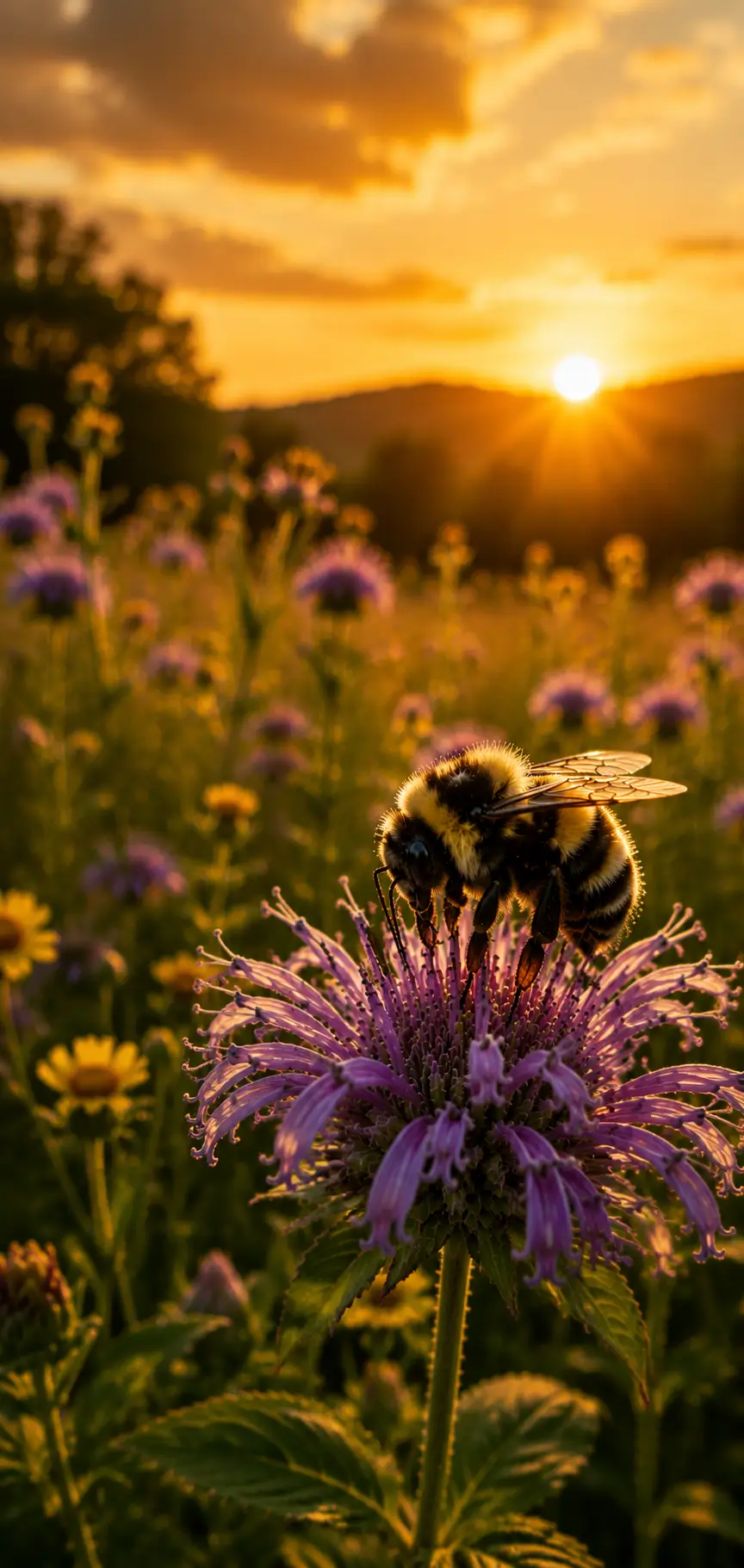

Key Point
Bee conservation is not simply about increasing the number of bees. It is about protecting bee diversity.
Honey Bees
Not federally endangered. Managed colonies still face parasites, disease, nutrition and pesticide pressures.

Solitary Native Bees
The majority of U.S. bee diversity. Many live independently in soil, stems, wood or natural cavities.

Bumble Bees
Native pollinators. Some remain common while other species have experienced severe population declines.
Endangered Bees
Some U.S. bee species have federal protection while others are declining, under review or poorly documented.
Not All Bees Are the Same
Bees may share a name, but their lives and roles in nature can be remarkably different. Understanding those differences is essential to knowing which bees need protection and what conservation actually works.
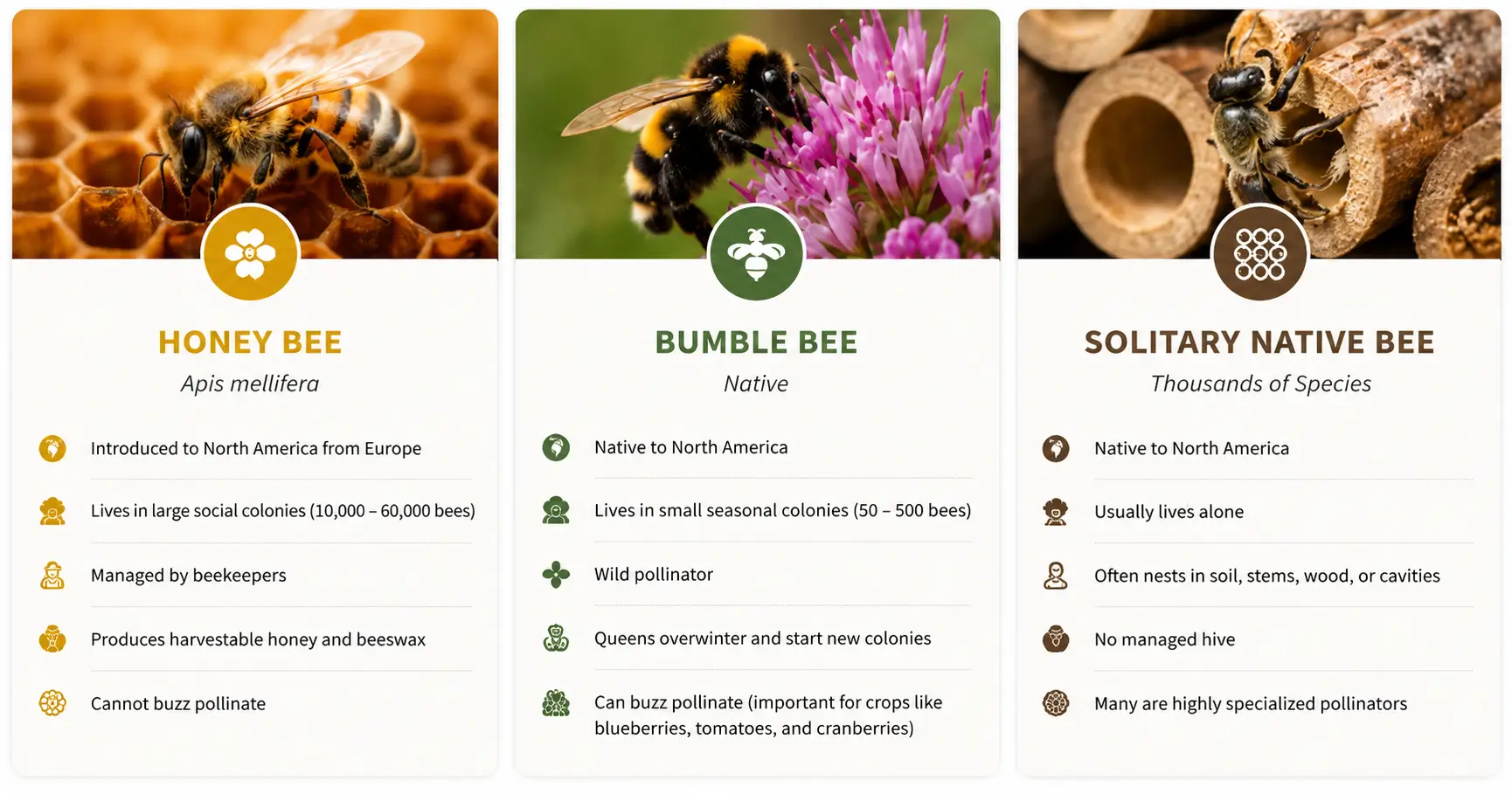
When most people hear the word bee, they picture a honey bee living in a wooden hive. But honey bees represent only one small part of the bee world.
The United States is home to roughly 4,000 species of native bees, and most do not live in large colonies or produce honey. Many live alone, nest in the ground, hollow stems, wood, or natural cavities, and depend on specific habitats and flowering plants.
Honey Bees
The western honey bee, Apis mellifera, is not native to North America. Honey bees were introduced from Europe beginning in the 1600s and are now deeply integrated into American agriculture. USGS estimates that honey bees increase U.S. crop values by more than $15 billion each year.
Honey bees live in large social colonies that may contain tens of thousands of workers. They can be managed, moved, divided, treated for disease, and maintained by beekeepers.
That makes their conservation situation very different from that of a declining wild bee population.
Honey bees face serious challenges from Varroa mites, pathogens, nutrition, pesticides, and other pressures, but managed honey bees in the United States are not federally endangered.
Bumblebees
Bumble bees are native pollinators and play an important role in both natural ecosystems and agriculture.
Unlike most native bees, bumble bees live socially in colonies. Their colonies are much smaller than honey bee colonies and usually last only one season. At the end of the season, most of the colony dies and newly produced queens survive to establish new colonies the following year.
Bumble bees can also perform buzz pollination—a behavior in which the bee vibrates a flower to release pollen. Honey bees cannot perform this type of pollination. Buzz pollination is particularly important for plants such as tomatoes, blueberries, and cranberries.
Some bumble bee species remain widespread, while others have undergone major population declines.
Solitary Native Bees
Most native bee species do not live in colonies at all.
A solitary female generally builds and provisions her own nest. Depending on the species, that nest may be underground, inside hollow stems, in existing holes in wood, or in other small natural cavities.
This group includes many mason bees, leafcutter bees, mining bees, squash bees, sweat bees, and other species.
Their needs can be very different from those of honey bees. A landscape with abundant flowers but no suitable nesting habitat may still be poor habitat for native bees.
Solitary Native Bees
Bee conservation is about more than adding honey bee hives. Different bees have different needs, and protecting them requires the right habitat, food, nesting areas, and responsible management.
- Honey bees need responsible beekeeping.
- Bumble bees need healthy habitat.
- Solitary native bees need food and nesting sites.
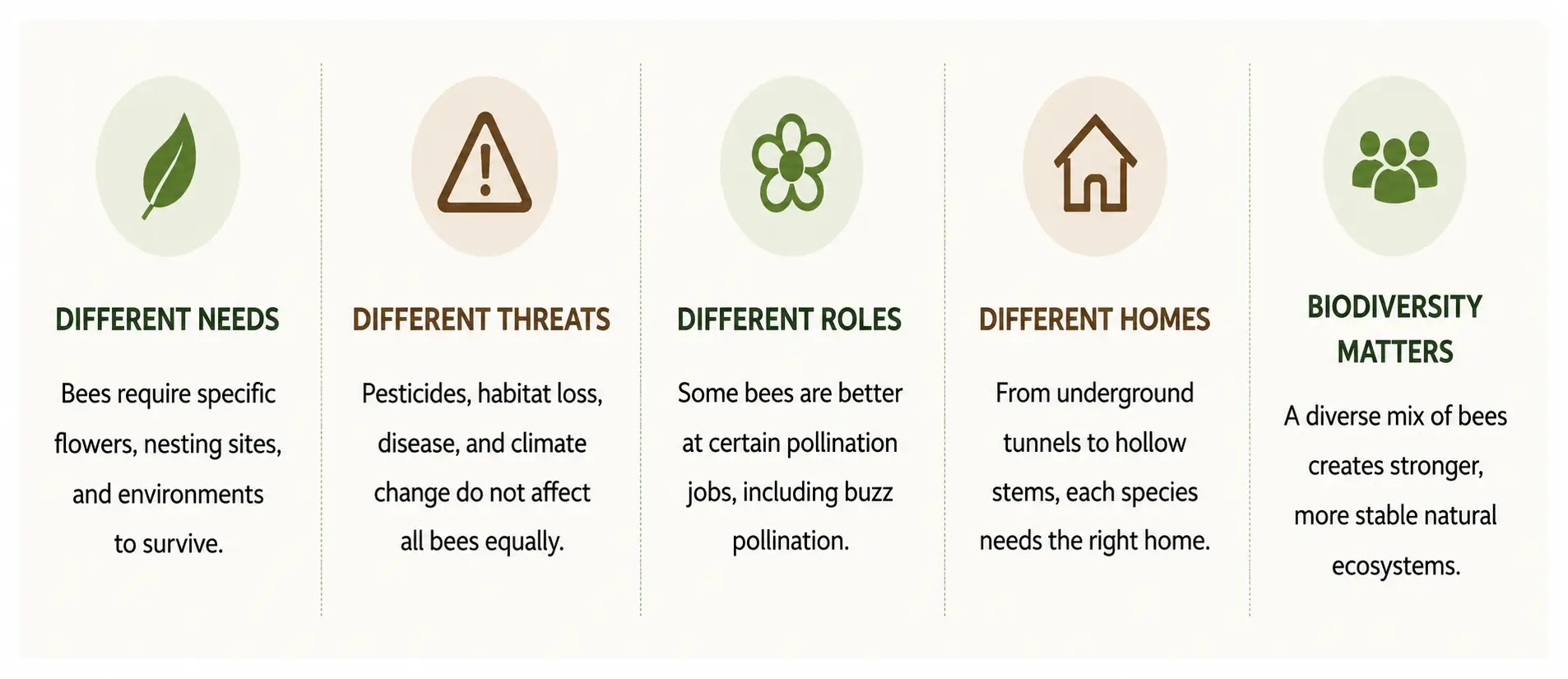
Protecting bee diversity is what matters most.
Which Bees Are Actually Endangered?
Not every bee in decline is federally endangered. In the United States, endangered status applies to specific species, and some of the most serious cases involve native bumble bees and other wild pollinators.
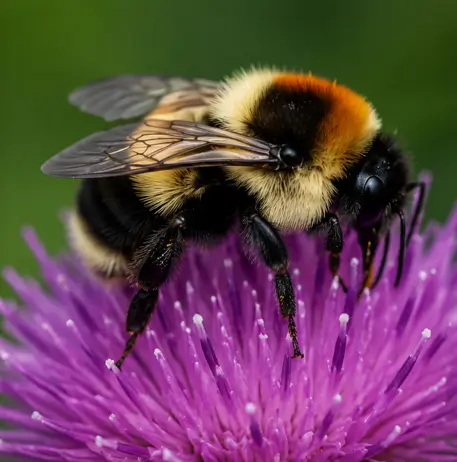
Rusty Patched Bumble Bee
Bombus affinis
FEDERALLY ENDANGERED
7% Decline
Once widespread across much of the Midwest and eastern United States, this native bumble bee has disappeared from much of its historic range.
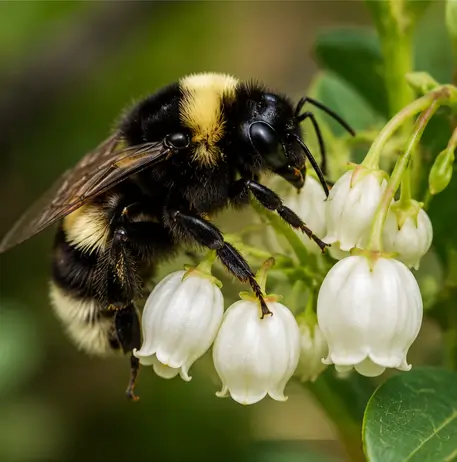
Franklin’s Bumble Bee
Bombus franklini
FEDERALLY ENDANGERED
Not observed since 2006
This species historically occupied one of the smallest known ranges of any bumble bee, centered in southern Oregon and northern California.
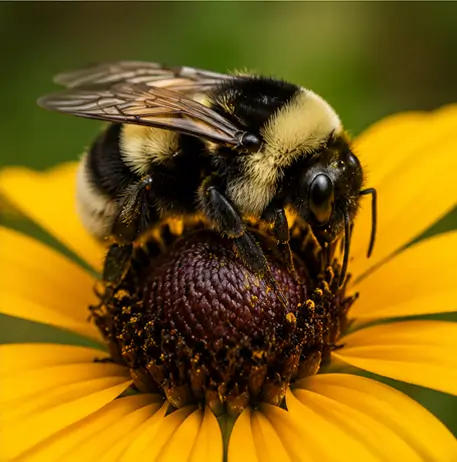
American Bumble Bee
Bombus pensylvanicus
CONSERVATION CONCERN
89% Decline
Once one of North America’s most widespread bumble bees, this species has experienced major declines across portions of its range.