
Observation hives give students a view of a honey bee colony through a clear wall. A beekeeper can bring a portable hive to a school and point out workers moving across the comb. Give the class one question before the viewing starts. For example, ask students to track a single bee until it disappears among its neighbors.
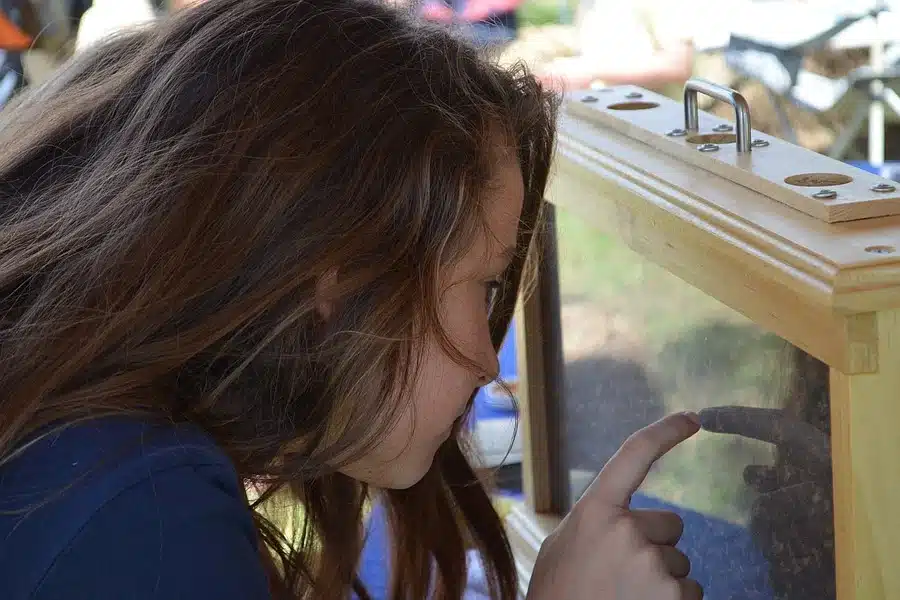
What makes observation hives useful in schools?
An enclosed, portable observation hive travels with the beekeeper. Students can watch while the colony stays behind the viewing panel. A permanent hive with an outdoor entrance has different care needs. The University of Florida guide to observation bee hives explains how the two designs work.
Look for a worker on the comb
First, look for a worker moving between cells. Ask the beekeeper to show the class a patch of stored food or capped brood if it is visible. A student might see a bee stop with its head in a cell. Record that observation, then ask which possible explanations fit. It is fine if the queen stays out of sight.
Trace pollen from a flower to the hive
Bees need flowers for food. On a foraging trip, loose pollen can move from one blossom to another. Observation hives show the other end of that trip. Inside, workers store pollen and use it to feed developing young. Ask each group to draw both scenes and put an arrow where pollen travels. Which part did they actually see inside the hive?
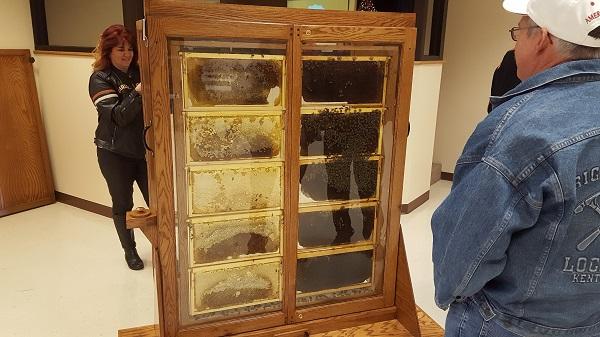
Set up a viewing spot for observation hives
Schools using observation hives need space for the beekeeper and for small groups to pass. Before the visit, agree on a stable display spot and a viewing route with the presenter. Then divide a large class into small groups so everyone has a clear view. The beekeeper handles the equipment. Students can sketch from their seats or use a photograph if they prefer more distance.
How can we use observation hives for a five-minute count?
Give partners a pencil, a timer and a sheet of paper. One partner watches a hand-sized patch of comb for a minute. The other counts how many bees come into view. Then they switch roles and compare their counts. Did they watch the same patch? Did they count a bee twice if it returned?
Take a classroom question into the garden
Afterward, have each student share one thing they saw and one question they still have. For example, where could bees find food outside the school this week? Save The Bees USA works with participating beekeepers through its nationwide network and coordinates local availability. Learn about the Observation Hive Program or use our free bee activities with your group.