10 Ways to Make a Difference
10 Ways to Save the Bees & Protect Pollinators
Protecting bees takes more than one solution. From restoring pollinator habitat and planting native flowers to supporting responsible beekeeping and bringing bee education into schools and communities, each of us can play a role in protecting pollinators. Explore ten meaningful ways we can help bees thrive and strengthen the ecosystems we all depend on.
Bee Conservation Starts With the Right Actions
Bee conservation is not about one single solution. Bees and other pollinators need healthy places to live, reliable sources of food, protection from harmful practices, and people who understand why they matter. From planting a small pollinator garden to restoring acres of habitat, every positive action can contribute to healthier pollinator populations.
The ten actions below focus on practical ways individuals, schools, communities, gardeners, and beekeepers can make a difference. Some provide food and habitat, while others support education, research, and responsible beekeeping. Together, they create a broader approach to protecting pollinators and the ecosystems that depend on them.
1. Pollinator Habitat Restoration
Bees need safe places to find food, build nests, and reproduce. Restoring pollinator habitat means bringing native plants and natural spaces back to areas where habitat has been lost. Even small restoration projects can provide valuable food and shelter while helping reconnect fragmented habitats across communities.
2. Pollinator Gardens
Pollinator gardens provide bees, butterflies, and other beneficial insects with dependable sources of nectar and pollen. Gardens can be created almost anywhere, from backyards and schools to businesses and community spaces. Choosing a variety of flowering plants helps provide food for different pollinators throughout the growing season.
3. Observation Hives & Bee Education
Seeing bees at work can transform curiosity into understanding. Observation hives give students and communities an opportunity to safely watch honey bees build comb, store food, communicate, and care for their colony. Hands-on education helps people understand why pollinators matter and inspires them to become part of their protection.
4. Native Bee Conservation
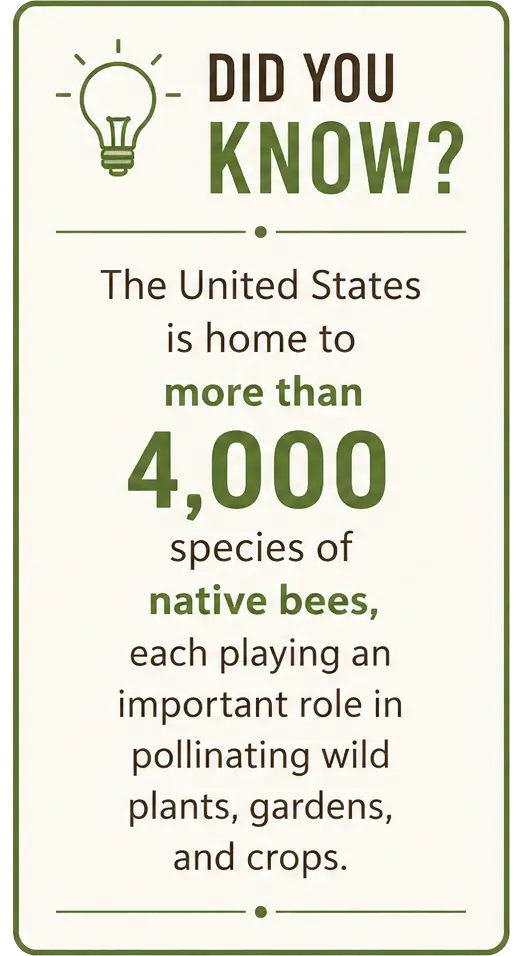
Honey bees are only part of the pollinator story. The United States is home to thousands of native bee species, including mining bees, leafcutter bees, sweat bees, and carpenter bees. Protecting native plants, nesting areas, and natural habitat gives these important local pollinators the resources they need to survive.
5. Bumblebee Conservation
Bumblebees are powerful native pollinators that help many wildflowers, fruits, and vegetables reproduce. They need flowering plants, nesting areas, and protected places to complete their life cycle. Creating bumblebee-friendly habitat and learning more about local populations can help communities better understand and protect these remarkable pollinators.
6. Responsible Beekeeping
Healthy honey bee colonies depend on knowledgeable and responsible care. Beekeepers can support colony health through proper nutrition, regular inspections, appropriate pest and disease management, and responsible hive placement. Good beekeeping practices protect managed colonies while encouraging greater awareness of native pollinators and the surrounding ecosystem.
7. Mason Bee Habitat
Mason bees are gentle, solitary native bees and highly effective spring pollinators. Unlike honey bees, they do not live in large colonies or produce honey. Providing suitable nesting cavities, nearby mud, and flowering plants can create valuable habitat while giving families and schools another way to experience native bee conservation.
8. Planting Native Flowers
Native flowers evolved alongside the pollinators that depend on them. Planting species suited to your region can provide dependable nectar and pollen while requiring less intervention once established. Choosing flowers that bloom during different seasons creates a longer-lasting food supply for bees from early spring through fall.
9. Reducing Pesticide Exposure
Pesticides can affect bees when they encounter treated plants, contaminated pollen, nectar, water, or nesting areas. Reducing unnecessary pesticide use and choosing targeted alternatives can lower potential exposure. When treatment is necessary, careful timing and following label directions can help reduce risks to bees and other beneficial insects.
10. Community Pollinator Education
Long-term conservation grows when people understand why pollinators matter. Schools, families, gardeners, businesses, and community organizations can help spread practical information about bees and their habitats. Educational programs, gardens, demonstrations, and local conservation projects turn awareness into action and help create communities where pollinators can thrive.
Every Action Can Make a Difference
Long-term conservation grows when people understand why pollinators matter. Schools, families, gardeners, businesses, and community organizations can help spread practical information about bees and their habitats. Educational programs, gardens, demonstrations, and local conservation projects turn awareness into action and help create communities where pollinators can thrive.
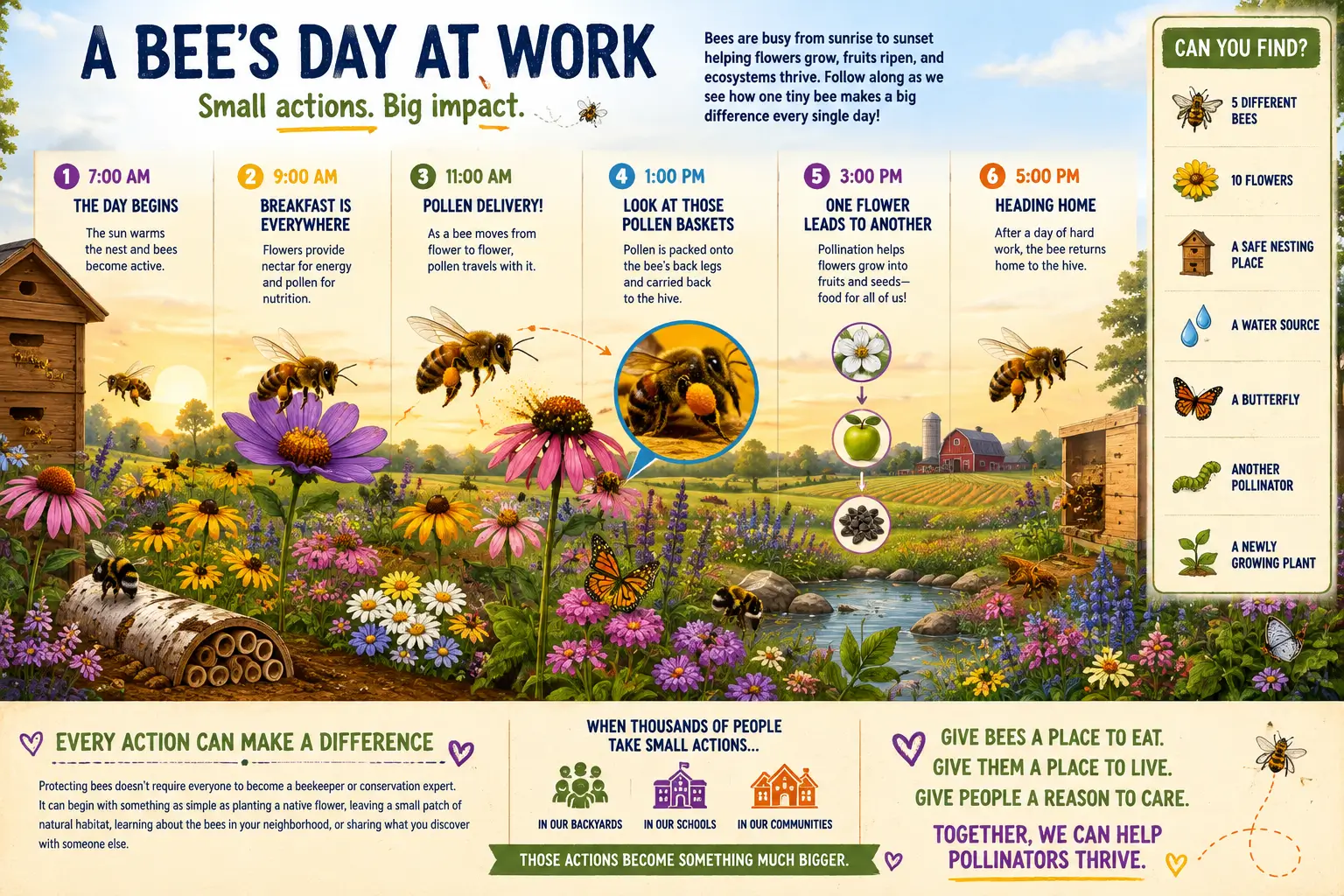
Protecting bees doesn’t require everyone to become a beekeeper or conservation expert. It can begin with something as simple as planting a native flower, leaving a small patch of natural habitat, learning about the bees in your neighborhood, or sharing what you discover with someone else.
When thousands of people take small actions in their own backyards, schools, farms, and communities, those actions become something much bigger.
Give bees a place to eat. Give them a place to live. Give people a reason to care. Together, we can help pollinators thrive.