
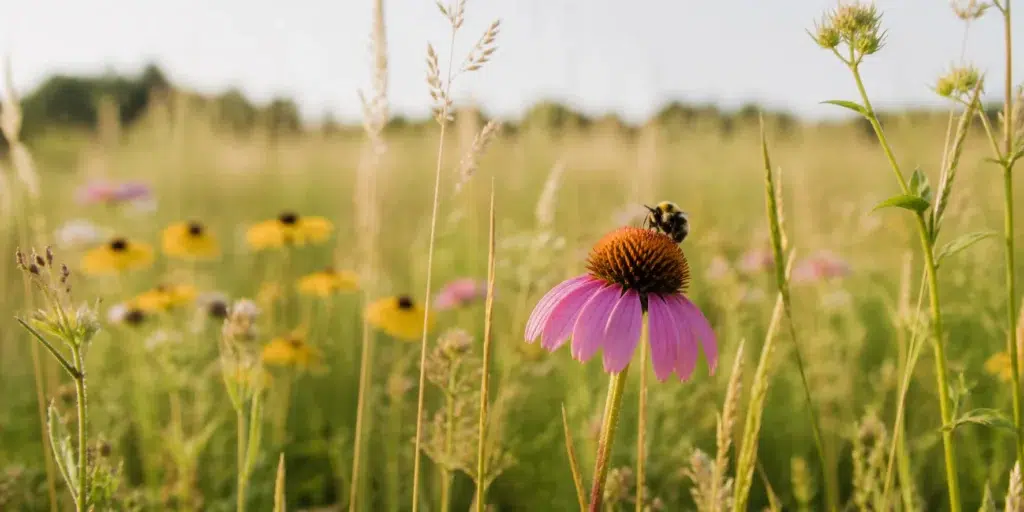
Two clues can help you understand bees and climate change where you live. Look for the first flowers to open in spring, then watch for bees visiting them. Warmer springs can shift both events. A stretch of extreme heat can also change where some bees survive, even in a place that still has flowers.
What research on bees and climate change tells us
Scientists compared more than a century of records for ten wild bee species in northeastern North America. By the end of the study, the bees were active about ten days earlier in spring, on average. The spring flowers they visited also shifted earlier at a similar pace. An early spring alone tells you little about whether a bee missed its food supply. You need dates for both the plant and its visitor. Read the spring bee and flowering study.
How does climate change affect bumble bees during heat waves?
Two gardens can have the same seasonal average temperature, yet one may experience a run of unusually hot days. Those extremes matter. Across North America and Europe, a study found that bumble bees were more likely to disappear from places where temperatures reached beyond the conditions they had experienced historically. The result varied by place and species. Read the bumble bee temperature study.
That finding helps explain why a familiar bee can become harder to find in part of its range. At home, though, an empty patch on a single hot afternoon tells you very little. Try visiting again at a cooler hour and on another day. Our bumblebee guide can help you recognize what turns up.

How to track bees and bloom times in your garden
Choose one patch you can visit through the season. Spend five minutes there at roughly the same time each week. Make a note even on a visit when you see no bees.
- Write down the date, time and whether the patch is sunny, shaded or windy.
- Name or photograph the flowers that are open. Count bee visits to the patch for five minutes. A bee can visit more than once.
- Note the first and last week each plant blooms. If little is flowering between two dates, mark that gap on your calendar.
For example, a class might count seven visits to blooming asters one sunny morning and zero on a windy afternoon. Recording the conditions gives those numbers context. Repeat the observations next season to compare years. Climate change refers to shifts over decades, so a single early bloom is only one piece of evidence. Pooling records from many gardens gives researchers much more to work with.
Keep food and nesting sites available
Use your notes to choose a plant that flowers during a gap in your yard. Native plants suited to your soil, light and rainfall are a useful starting point. Leave some undisturbed bare soil for ground-nesting bees and standing stems for species that use hollow cavities. Avoid spraying blooming plants when bees are visiting. See our pollinator plant guide for help choosing what to grow.
Save The Bees USA helps families and schools explore pollinators through hands-on activities. Bring your bloom calendar to your next club meeting, or try a bee activity with your class. If you want to support managed honey bee colonies as well, explore our Adopt A Queen Program.