
UNDERSTAND THE COLONY
Queen Bees: The Heart of a Honey Bee Colony
Learn how a queen develops, communicates, reproduces, and helps organize the life of an entire honey bee colony—and why responsible beekeepers monitor queen health carefully.
ONE BEE, COLONY-WIDE INFLUENCE
What Does a Queen Bee Do?
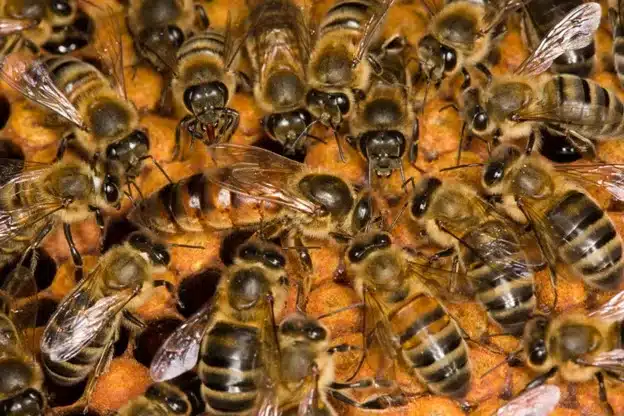
The queen is the colony’s primary reproductive female. During strong periods she may lay more than a thousand eggs per day, providing the next generation of workers and drones.
She also produces pheromones that help maintain colony cohesion. Workers feed, groom, and surround her, distributing these chemical signals throughout the hive.
A queen does not command workers like a human leader. Colony decisions emerge from communication among thousands of bees, local conditions, food availability, and the colony’s needs.
FROM EGG TO ADULT
The Queen Bee Life Cycle
Queens and workers begin as fertilized eggs. Their different development is shaped largely by larval nutrition and the queen cell in which they grow.
Egg
A fertilized egg is laid in a specially prepared queen cell.
Larva
Nurse bees feed the larva abundant royal jelly throughout development.
Pupa
The capped queen cell protects the developing pupa during transformation.
Adult
A virgin queen emerges, matures, and may take mating flights when conditions allow.
NATURAL COLONY CHANGE
Why Colonies Raise a New Queen
Swarming
A thriving colony may reproduce by dividing. The old queen leaves with part of the workforce while the original colony raises a successor.
Supersedure
Workers may replace an aging, injured, or poorly performing queen while the colony remains in place.
Emergency
If a queen is suddenly lost, workers can attempt to raise a replacement from a very young female larva.
READ THE COLONY
How Beekeepers Evaluate Queen Performance
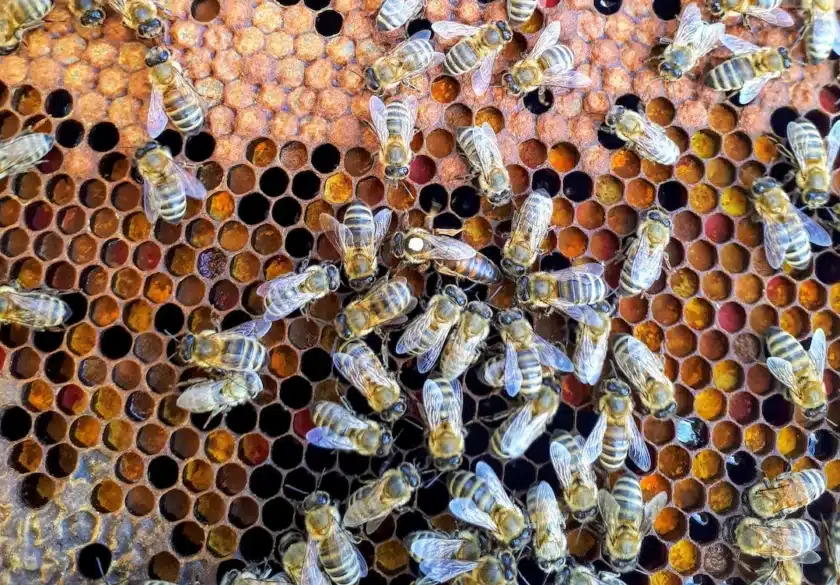
Responsible beekeepers look beyond simply finding the queen. They inspect the brood pattern, eggs and young larvae, colony temperament, population balance, food stores, disease signs, and seasonal context.
- A consistent brood pattern appropriate for the season
- Eggs and larvae of different ages
- A population capable of caring for brood
- No unexplained queen cells or prolonged brood interruption
- Written records that reveal change over time
One inspection rarely tells the whole story. Careful records and repeated observations support better decisions.
KNOW THE CASTES
Queen, Worker, and Drone Bees
| Queen | Workers | Drones |
|---|---|---|
| Primary reproductive female | Female bees that perform most colony tasks | Male bees whose primary biological role is mating |
| Develops in a queen cell and receives sustained royal jelly | Develop in worker cells and shift tasks with age | Develop from unfertilized eggs in larger cells |
| Can live for several years, though performance changes | Life span varies greatly by season and workload | Often removed from colonies when resources decline |
RESPONSIBLE DECISIONS
Requeening With Colony Health in Mind
Confirm the Need
Investigate nutrition, mites, disease, weather, brood breaks, and other causes before blaming the queen.
Choose Appropriate Stock
Consider locally adapted genetics, temperament, productivity, survivability, and legal movement requirements.
Monitor Introduction
Introduce a new queen carefully, minimize stress, and verify acceptance and egg laying afterward.
KEEP LEARNING
Explore Responsible Beekeeping Programs

Beekeeping
Build practical knowledge before managing a colony.
Learn about beekeeping
Hive Sponsorship
Help fund responsible hive care, habitat, and education.
Explore sponsorship
Adopt A Hive
Support colony stewardship through an annual adoption.
Adopt a hiveQUEEN BEE FAQ
Common Questions About Queen Bees
Is there always one queen in a honey bee colony?
Most established colonies normally have one laying queen, although brief overlap can occur during replacement or swarming.
How can you identify a queen bee?
She usually has a longer abdomen, a smoother-looking thorax, and a circle of attending workers. Size and color vary, so behavior and body shape matter more than color alone.
Does the queen control every bee?
No. Her pheromones influence colony organization, but workers make many collective decisions through decentralized communication.
What is royal jelly?
Royal jelly is a nutrient-rich glandular secretion made by nurse bees. Sustained feeding helps a female larva develop into a queen.
Why do beekeepers mark queens?
A small, carefully applied paint mark can make a queen easier to locate and may indicate the year she emerged. Marking should be done without injuring her.
What should I do if I find a swarm?
Keep a safe distance and contact an experienced local beekeeper or swarm-removal network. Avoid spraying or disturbing the cluster.
HEALTHY COLONIES NEED INFORMED CARE
Support Better Beekeeping and Stronger Pollinator Communities
Education, careful monitoring, healthy habitat, and responsible decisions give honey bee colonies their best chance to thrive.