
Honey bee pollination can be easy to see and hard to measure. You can count ten landings on a flower head. But how much pollen reached the part of the flower that receives it? Researchers ask both questions because they measure different things.
How common are honey bee visits to flowers?
Researchers compared records from 80 plant and pollinator networks in natural habitats. Western honey bees accounted for about 13% of flower visits on average. In some places observers recorded none, while at one site they accounted for 85%. The survey covered many different places, so its average is a poor prediction for a particular backyard. Read the flower-visitor study by Hung and colleagues.
How do scientists measure honey bee pollination?
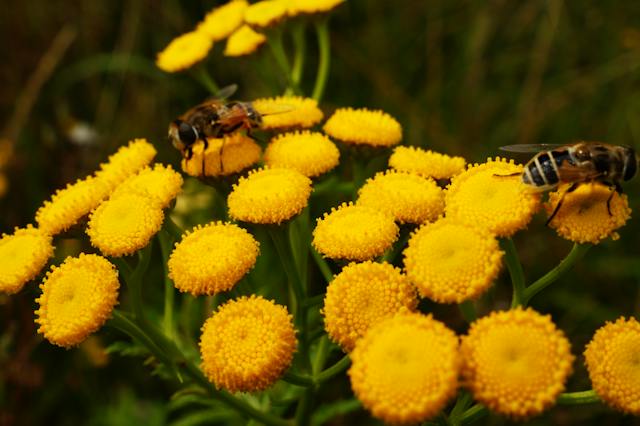
Imagine two insects visiting the same kind of flower. One takes a long drink, brushes the pollen-bearing parts and touches the part that receives pollen. The other lands for a moment and leaves with little contact. A notebook would show one visit by each, even if their contributions differed.
To study a flower visit, researchers can look for the pollen left behind or measure how many seeds form afterward. The study compared single visits where suitable records existed. Honey bees performed about as well as the average visitor in those comparisons. However, another visitor often did better on a given plant.
Does a flower depend on just one bee?
The observers saw only honey bees on about 5% of the plant species in their records. That tells us who turned up during the study. It cannot establish that those plants need honey bees alone to make seed. On nearly half the plant species, the observers recorded no honey bee visits. Those differences are a reason to look for native bees as well as honey bees.

Try a flower observation
Choose one flower patch and write down the date, time and weather. For five minutes, count landings, then describe what each visitor did. Did it touch the center of the flower or land only on a petal? You can report what you saw and leave the question of how much pollen moved open. For help recognizing one familiar visitor, see our western honey bee field guide.