Expand Pollinator Habitat
Flowers for Bees
Plant a succession of nectar- and pollen-rich flowers that feed bees from the first warm days of spring through the final blooms of fall.
Why Flowers Matter to Bees
Flowers are much more than colorful plants. They are a lifeline for bees. Every flower provides nectar for energy and pollen for protein. Together, these natural foods help bees survive, build healthy colonies, and raise the next generation. Without enough flowers, bees must travel farther to find food. That uses more energy and leaves less time for pollination. A garden filled with blooming flowers can become a busy feeding stop for honey bees, bumble bees, mason bees, leafcutter bees, and many other native pollinators. By planting flowers that bloom from spring through fall, you can provide a steady source of food all season long. Every flower has a purpose, and every bloom helps support a healthier environment. Whether you plant a small flower bed or fill your landscape with native flowers, you are creating habitat that benefits pollinators and the plants, gardens, and farms that depend on them.
Best Summer Flowers for Bees
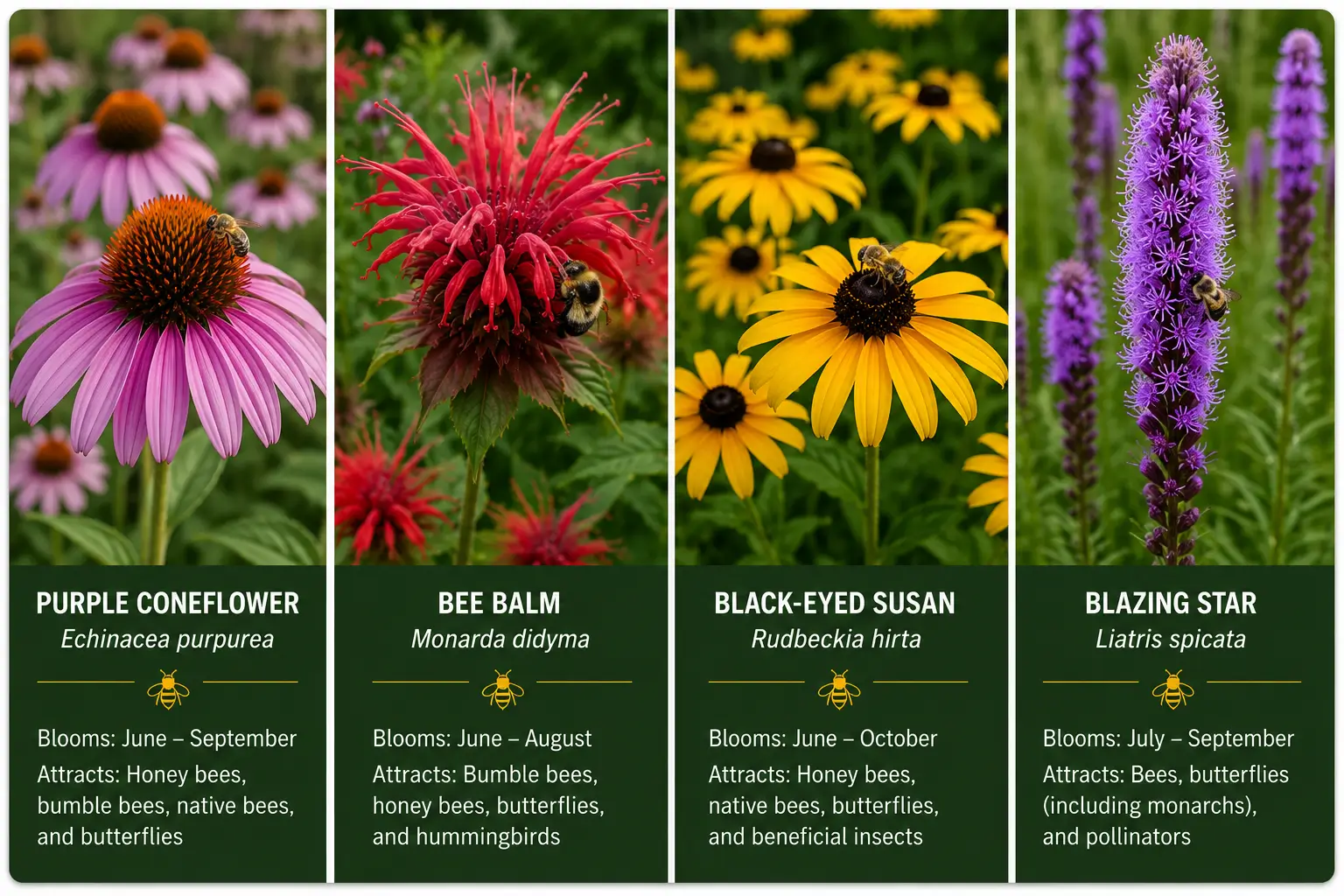
Summer is the busiest season for bees, and these four native flowers provide some of the best food available. Purple Coneflower blooms from early summer into fall and attracts honey bees, bumble bees, and many native bee species. Bee Balm produces nectar-rich flowers that are loved by bumble bees, honey bees, butterflies, and hummingbirds. Black-eyed Susan offers reliable pollen throughout the summer and grows across much of the United States. Blazing Star, also called Liatris, produces tall flower spikes that attract bees, butterflies, and migrating monarchs. Together, these flowers create a long season of blooms while adding bright color to the landscape. Most grow best in full sun, tolerate heat, and require little care once established. Planting them together creates a beautiful garden that supports pollinators from early summer through the first cool days of fall.
Best Native Flowers for Pollinators
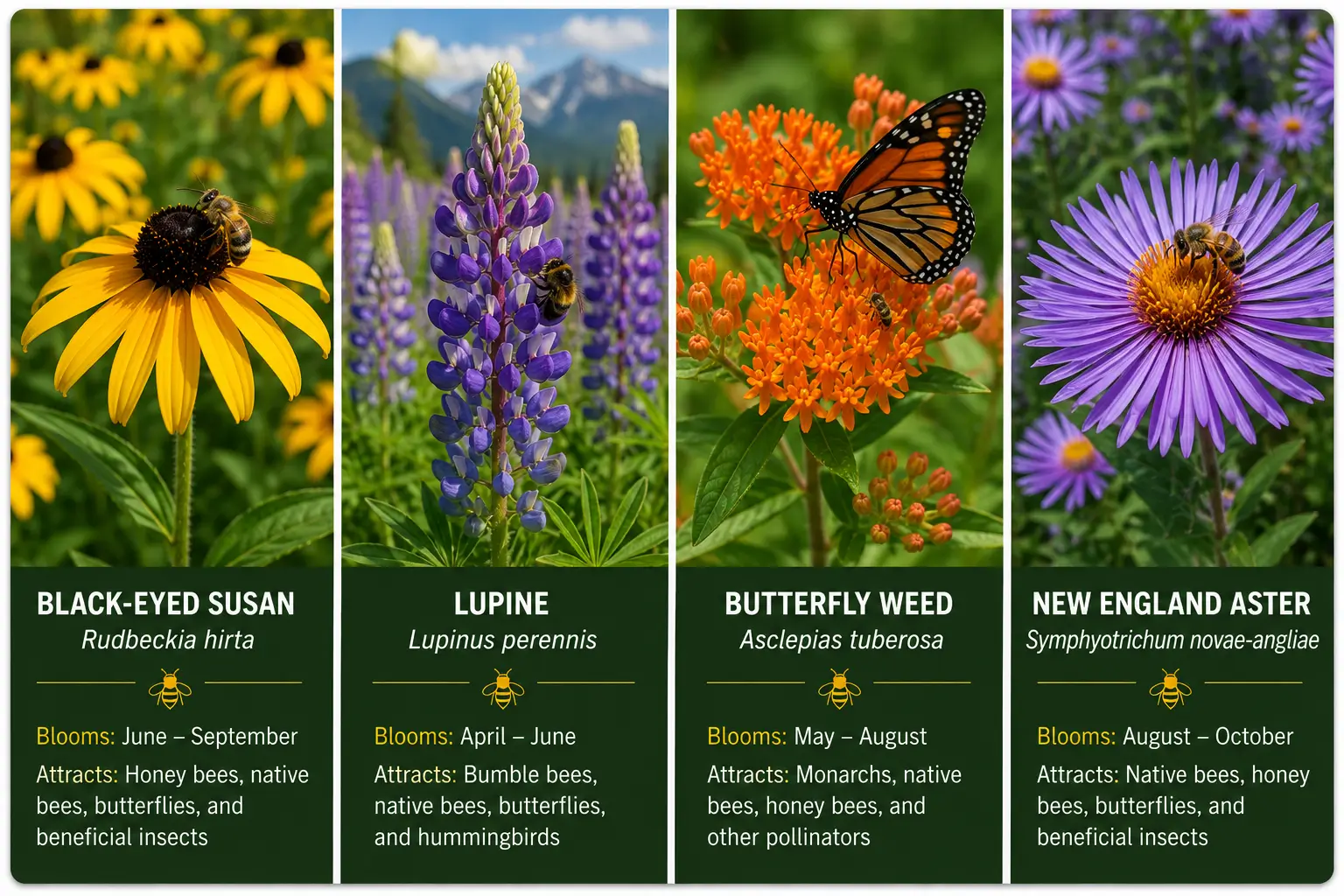
Native flowers are one of the best ways to support bees, butterflies, and other pollinators. These plants have grown alongside local wildlife for thousands of years. They provide the nectar and pollen that many native bee species depend on throughout the growing season. Once established, native flowers often need less water, less fertilizer, and less care than many ornamental plants. They are also better adapted to local weather and soil, making them easier to grow in home landscapes. By planting a variety of native flowers that bloom from spring through fall, you can create a colorful garden that provides food for pollinators all season long. Every native flower you add helps restore habitat and supports a healthier ecosystem.
Flowers That Honey Bees Love
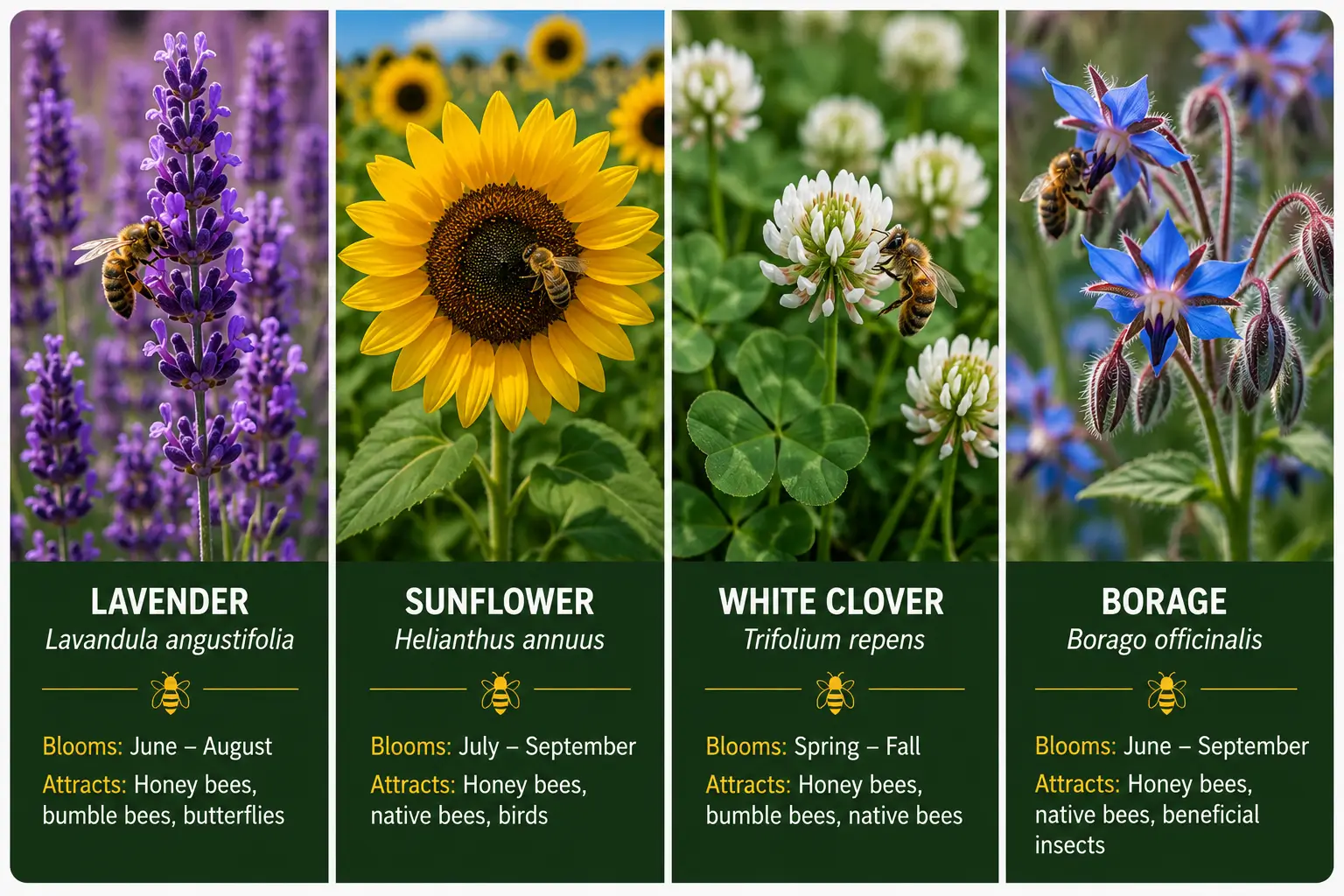
Honey bees visit thousands of flowers each day, but some plants produce much more nectar and pollen than others. Choosing flowers that bloom for a long time helps provide a steady food source from spring through fall. Honey bees are especially attracted to large groups of flowers because they can collect more nectar without flying as far. Purple coneflowers, lavender, bee balm, sunflowers, and clover are some of their favorites. These plants are easy to grow in many parts of the United States and perform well in home gardens, parks, schools, and farms. Planting several varieties together creates a longer bloom season and keeps honey bees returning throughout the year. A garden filled with nectar-rich flowers not only supports healthy bee colonies but also helps pollinate fruits, vegetables, trees, and many other plants that people depend on every day.
Flowers for Butterflies and Bees
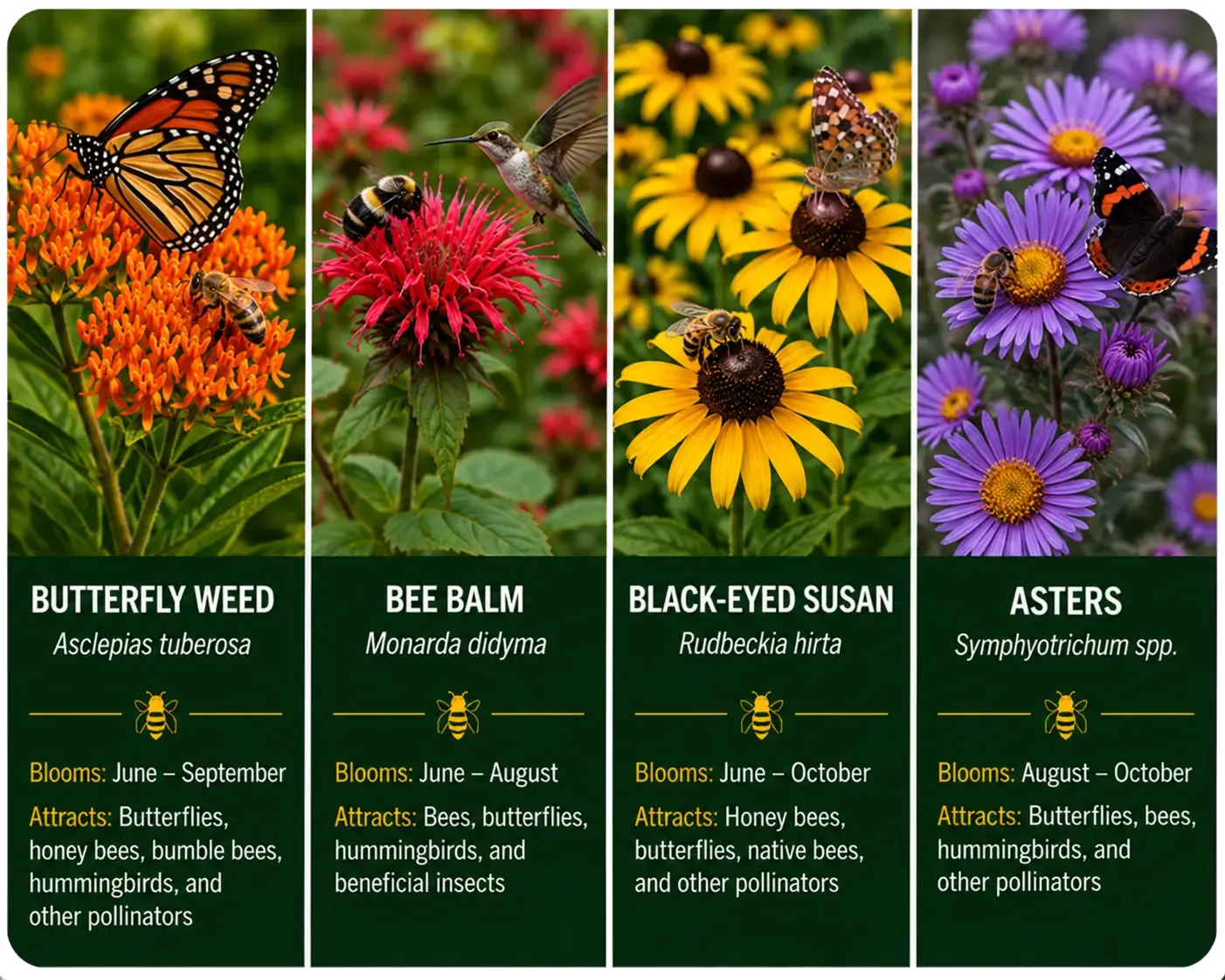
A pollinator garden is one of the easiest ways to help both bees and butterflies. While these insects look very different, they depend on many of the same flowers for food. Bright, nectar-rich blooms provide the energy they need to fly, find mates, and raise the next generation. Every flower you plant adds another food stop to their journey. Even a small garden can become a busy place filled with honey bees, bumble bees, monarch butterflies, swallowtails, and many other helpful pollinators.
Some flowers are true pollinator favorites because they attract many different species. Purple coneflowers, butterfly weed, bee balm, blazing star, black-eyed Susans, asters, and goldenrod all produce nectar that bees and butterflies love. Better yet, they bloom at different times of the year. That means your garden can provide food from early spring until the first frost. A longer bloom season gives pollinators a better chance to find food whenever they need it.
The best gardens are planned with variety in mind. Plant flowers in groups instead of scattering them around the yard. Large patches are easier for pollinators to see from the air. Choose native flowers whenever possible because they are adapted to your local climate and naturally support local wildlife. Skip plants treated with pesticides, and include flowers with different colors, heights, and bloom times. Before long, your garden will be alive with bees collecting pollen, butterflies drifting from flower to flower, and the quiet sound of nature at work. Every bloom helps create a healthier habitat for pollinators and a more beautiful landscape for everyone to enjoy.
Long Blooming Flowers
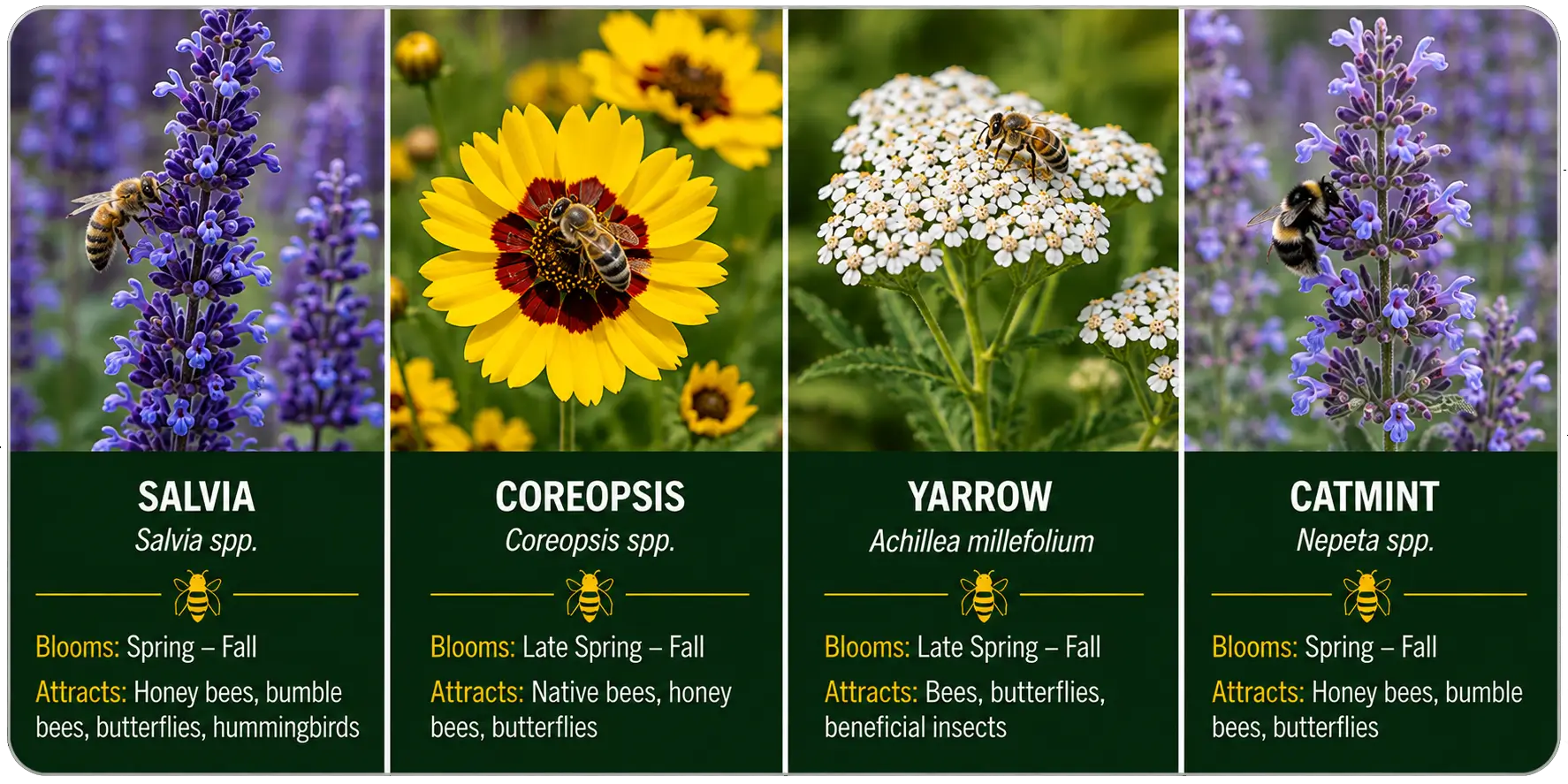
Long blooming flowers give bees and butterflies more time to find food. They stay in bloom for many weeks, so they can help fill gaps between spring, summer, and fall flowers. This makes them a smart choice for any pollinator garden. Salvia, coreopsis, yarrow, and catmint are known for long bloom times and steady color. Many of these flowers are easy to grow and need little care once they are established. They also work well in flower beds, school gardens, parks, and small home yards. Plant them in groups so bees can find them faster. Remove old blooms when needed to help some plants flower again. By adding long blooming flowers, you can keep your garden active for more of the year and give pollinators a steady place to feed.
Regional Favorites for Pollinator Gardens Across the United States
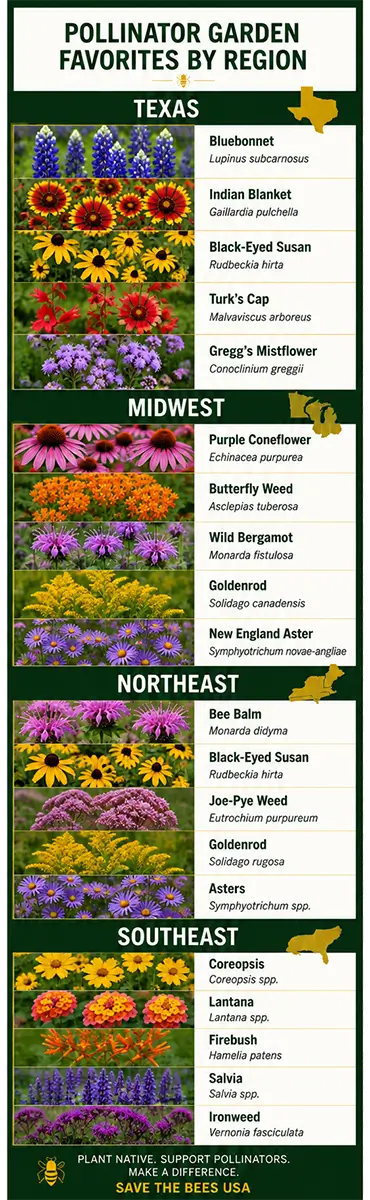
The best flowers for bees and butterflies often depend on where you live. A plant that grows well in Texas may struggle in the Northeast, while flowers that thrive in the Midwest may not perform as well in the Southeast. Choosing plants that are native or well adapted to your region gives pollinators the greatest benefit. These flowers bloom at the right time, provide dependable nectar and pollen, and are better suited to local weather, soil, and rainfall. They also need less water and maintenance once they become established, making them an excellent choice for both new and experienced gardeners.
Texas gardens are known for colorful wildflowers such as bluebonnets, Indian blanket, Gregg’s mistflower, Turk’s cap, and black-eyed Susans. Across the Midwest, prairie plants like butterfly weed, wild bergamot, goldenrod, and New England asters create some of the richest pollinator habitat in the country. In the Northeast, bee balm, Joe-Pye weed, asters, and native goldenrods provide valuable late-season food for bees preparing for winter and butterflies beginning their migration. The warm climate of the Southeast supports long blooming favorites such as coreopsis, lantana, firebush, salvia, and ironweed, giving pollinators nectar through much of the year.
No matter where you live, the goal is the same. Plant flowers that bloom from spring through fall, include several native species, and grow a variety of shapes, colors, and heights. Different pollinators prefer different flowers, so diversity creates a healthier garden. Even adding a few regional favorites to an existing flower bed can make a noticeable difference. Before long, your yard can become an important stop for honey bees, native bees, butterflies, hummingbirds, and many other beneficial insects. By planting flowers that naturally belong in your region, you help strengthen local ecosystems while creating a beautiful landscape that changes with every season.
Every Garden Can Help Protect Pollinators