
LEARNING THAT FITS THE SCHOOL DAY
School Bee Programs That Connect Science and Stewardship
Flexible school programs can support classroom standards, environmental literacy, campus habitat, and memorable hands-on learning for students and teachers.
BUILT FOR EDUCATORS
Plan a Program Around Learners, Goals, and Setting
A successful school program begins with grade level, learning goals, group size, time, accessibility, facilities, and school safety procedures.
Programs may include classroom lessons, assemblies, habitat walks, teacher resources, observation-hive experiences, or a sequence of activities across the school year.

LEARNING OUTCOMES
What Learners Can Discover
Science Content
Pollination, life cycles, ecosystems, adaptation, and biodiversity.
Observation Skills
Notice patterns, ask questions, record evidence, and compare findings.
Systems Thinking
Connect bees with plants, food, weather, land use, and people.
Local Action
Identify realistic improvements for campus and community habitat.
PROGRAM DESIGN
A Strong Learning Experience Includes
Before the Visit
Teachers receive vocabulary, expectations, and preparation ideas.
During the Program
Facilitators use visuals, questions, and structured participation.
After the Program
Follow-up activities extend learning and measure understanding.
FROM CURIOSITY TO ACTION
Turn Learning Into Pollinator Stewardship
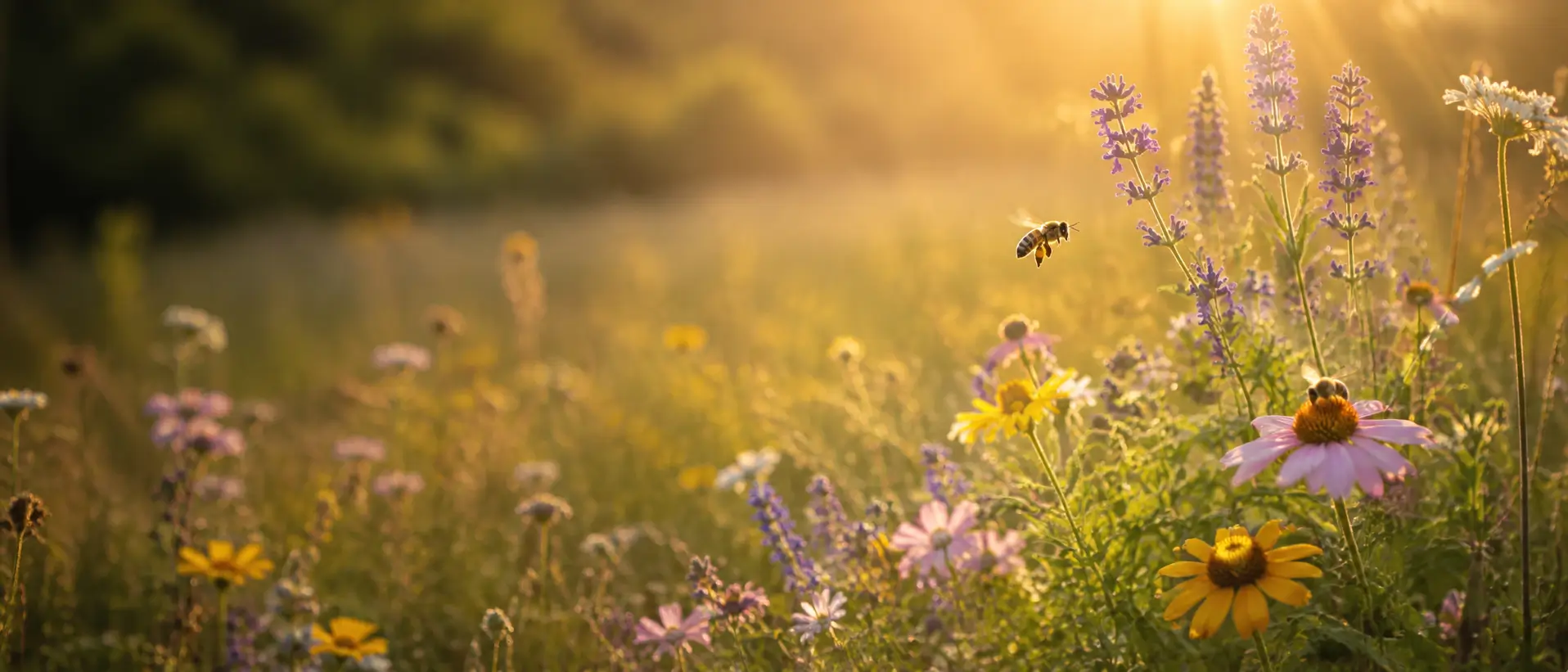
A campus can become a living laboratory. Even a small planting or seasonal observation route can support repeated learning across grades and subjects.
- Audit campus bloom and nesting resources
- Create grade-appropriate pollinator field journals
- Invite families into a habitat improvement project
- Connect lessons with art, writing, math, and geography
PROGRAM FAQ
Questions Educators and Families Ask
How long is a school program?
Programs can range from a focused classroom session to a multi-visit sequence. Scope should match goals, age, and schedule.
Can programs serve large groups?
Yes, though rotations or smaller groups often improve participation and observation.
What should schools prepare?
Confirm space, supervision, accessibility, allergy and emergency procedures, technology, and weather alternatives.
Can teachers receive lesson support?
A strong program can include vocabulary, extension activities, reading suggestions, and assessment prompts.
EDUCATE THE NEXT GENERATION
Help Young People Understand—and Protect—Pollinators
Thoughtful bee education connects science, observation, habitat, and meaningful community action.