
SCIENCE IN MOTION
Bee STEM: Investigate Biology, Engineering, Data, and Design
Bees create authentic STEM questions—from pollination and colony communication to thermal regulation, geometry, sensors, and habitat data.
AN AUTHENTIC STEM CONTEXT
Use Bee Questions to Practice Scientific Thinking
Learners can observe patterns, form hypotheses, collect data, create models, test designs, and communicate findings through bee-centered investigations.
The strongest projects begin with a focused question and use evidence to support conclusions rather than treating every activity as a demonstration.

LEARNING OUTCOMES
What Learners Can Discover
Life Science
Investigate anatomy, development, behavior, and ecological relationships.
Engineering
Design nest structures, water stations, barriers, or monitoring tools.
Mathematics
Measure rates, compare counts, graph trends, and interpret variation.
Technology
Use cameras, sensors, mapping, or spreadsheets to organize evidence.
PROGRAM DESIGN
A Strong Learning Experience Includes
Inquiry First
Students begin with a testable or researchable question.
Visible Evidence
Data tables, drawings, graphs, and models make thinking observable.
Iteration
Learners revise explanations or designs after testing and feedback.
FROM CURIOSITY TO ACTION
Turn Learning Into Pollinator Stewardship
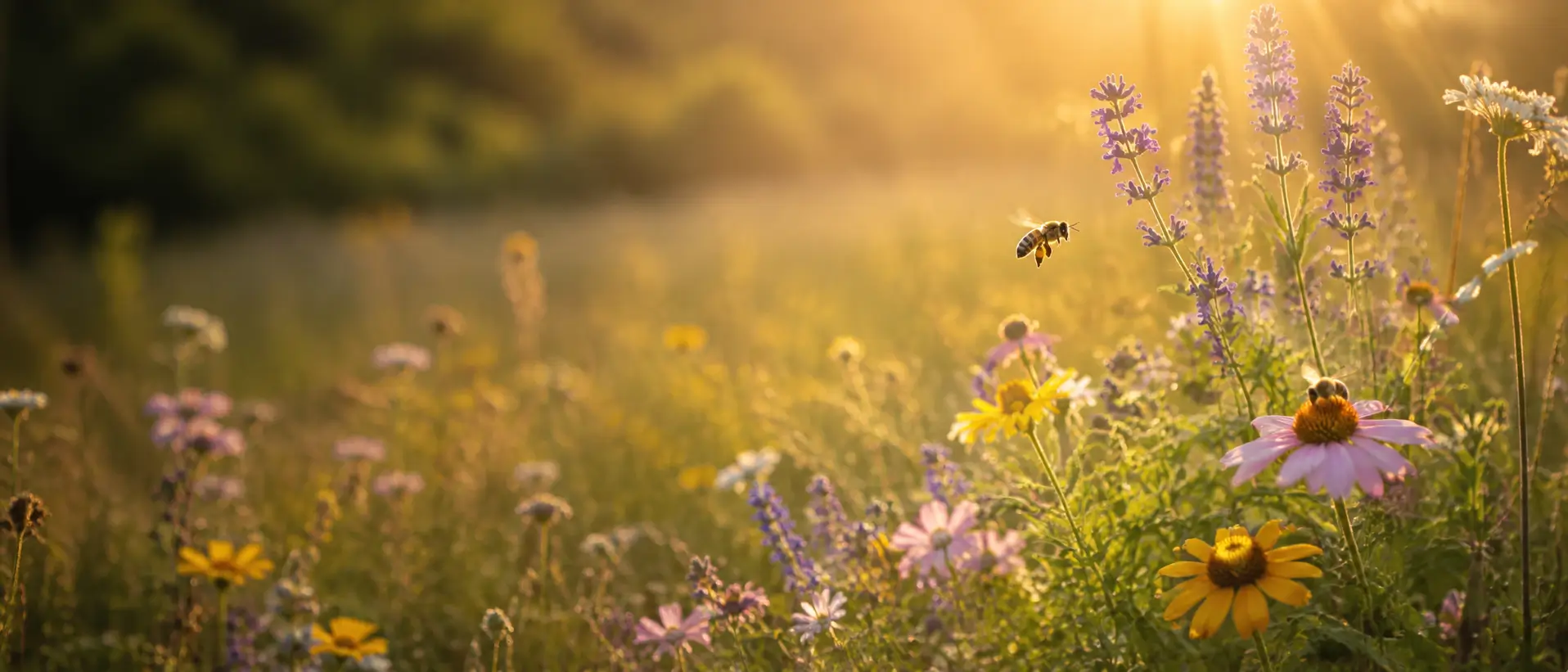
Bee STEM can move between classroom models and outdoor evidence. Local bloom, temperature, visitation, or nesting observations make projects relevant without disturbing bees.
- Conduct timed pollinator counts from a safe distance
- Graph bloom periods across a school landscape
- Model how hive ventilation regulates temperature
- Design and test a shallow pollinator water station
PROGRAM FAQ
Questions Educators and Families Ask
Does Bee STEM require a hive?
No. Many strong investigations use flowers, public datasets, models, photos, or outdoor observations.
Can projects align with standards?
Yes. Activities can support life science, ecosystems, engineering design, mathematics, data literacy, and scientific communication.
How do we avoid disturbing bees?
Use observation distances, time limits, adult supervision, and non-invasive protocols.
Can learners collect citizen-science data?
Yes, when the project uses an appropriate platform, protects privacy, and follows the platform’s observation guidance.
EDUCATE THE NEXT GENERATION
Help Young People Understand—and Protect—Pollinators
Thoughtful bee education connects science, observation, habitat, and meaningful community action.